









What is water damage restoration?
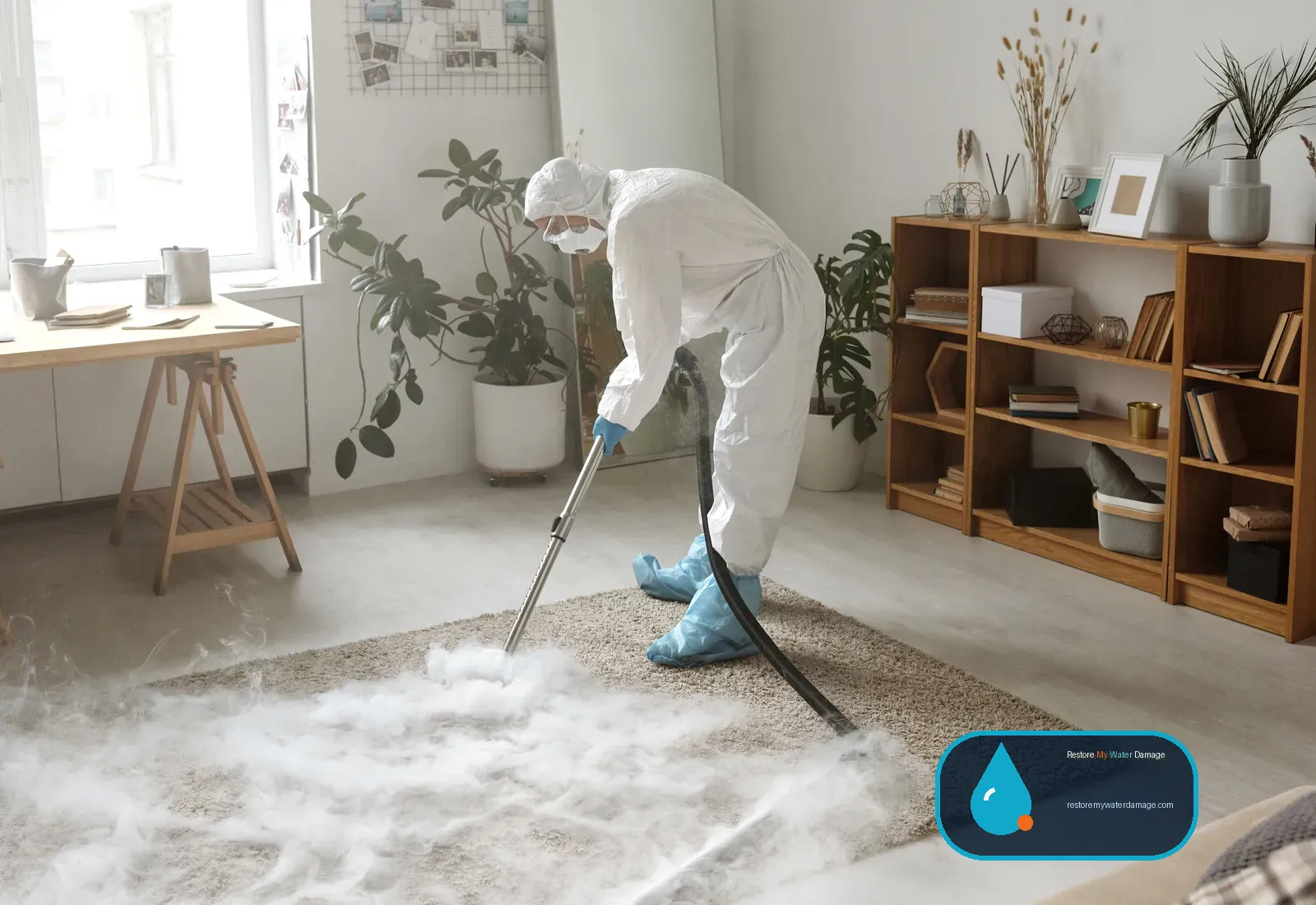
Water damage restoration is the professional process of stopping further damage from unwanted water, removing that water, drying the building materials to measured targets, cleaning and sanitizing what can be saved, and replacing what cannot. The goal is to return the property to its pre-loss condition while preventing secondary damage such as mold growth, delamination, warping, and persistent odor.
The work is guided by the IICRC S500 Standard for Professional Water Damage Restoration, which describes how to assess contamination, how to set up drying, and how to verify that materials are actually dry rather than just dry to the touch. When mold is already present, the related IICRC S520 standard applies. These documents are not laws, but they are the reference point that insurers, adjusters, and experienced contractors use to judge whether a job was done correctly.
Restoration is different from simple cleanup. Mopping up a puddle deals with what you can see. Restoration deals with the water you cannot see: the moisture wicking up drywall, trapped under vinyl plank flooring, soaked into the bottom plate of a wall, or sitting in a subfloor. If that hidden moisture is left behind, problems often show up weeks later as swollen baseboards, cupped hardwood, musty smells, or visible mold.
What does water damage restoration include?
A full water damage restoration service usually covers seven phases: inspection and moisture mapping, water extraction, removal of unsalvageable materials, structural drying and dehumidification, cleaning and antimicrobial treatment, monitoring and documentation, and repairs or reconstruction. Not every job needs every phase, and some companies stop at drying while a separate contractor handles the rebuild.
- Inspection: finding the source, identifying the water category and class, checking for electrical and structural hazards, and mapping the wet area with moisture meters and often thermal imaging.
- Extraction: removing standing and absorbed water with truck-mounted or portable extractors. See our page on water extraction and structural drying for detail.
- Controlled demolition: removing wet carpet pad, flood cuts in drywall, saturated insulation, or contaminated materials.
- Drying: placing air movers and dehumidifiers, sometimes with specialty wall-cavity or hardwood floor drying systems.
- Cleaning and sanitizing: cleaning surfaces and applying antimicrobials where the contamination level calls for it.
- Monitoring: taking and recording daily readings until materials reach dry goals.
- Repair: drywall, paint, trim, flooring, cabinetry, and other rebuild work.
Why speed matters
Water damage gets more expensive by the hour because water keeps moving into porous materials and contamination worsens over time. Clean water that sits for a couple of days can degrade to a more contaminated category, and many wet organic materials can begin supporting mold growth within roughly 24 to 48 hours under warm, humid conditions.
Speed also affects what can be saved. Carpet that is extracted promptly from a clean-water leak can often be dried in place. The same carpet after several days, or after contact with sewage, usually has to go. Particleboard cabinet bases swell and do not recover. Hardwood that is dried quickly with the right equipment has a better chance of flattening back out than hardwood left to cup for a week.
Finding water damage restoration near you
The fastest way to find water damage restoration near you is to enter your ZIP code or call (833) 435-4276; we connect you with restoration providers that serve your area so you are not calling down a list of search results during an emergency. Local coverage matters because drying equipment has to be delivered, checked daily, and adjusted as materials dry.
When you search for water damage restoration near me, results mix national franchise locations, independent local contractors, lead directories, and general contractors who occasionally do water work. Proximity is useful, but it is not the only thing that matters. A company fifteen miles away with trained technicians and proper drying equipment is a better choice than a closer one that plans to put a box fan in the room.
Our water damage restoration near me page explains how the ZIP lookup works, what to ask on the first call, and how to tell quickly whether a local provider is equipped for your type of loss. You can also browse the service areas locator by state and market.
What to have ready when you call
- Your address and ZIP code.
- The source of the water, if known (supply line, water heater, roof, sewer, flood, appliance).
- Whether the water is still flowing and whether you have shut it off.
- Roughly how long the water has been present.
- Which rooms and floors are affected, and whether water reached a basement or crawlspace.
- Whether the water is clean, gray (appliance discharge), or black (sewage or outside floodwater).
- Your insurance carrier and whether you have already opened a claim.
What should you do first after water damage?
First make sure everyone is safe, then stop the water at its source, cut power to affected areas if you can do so without standing in water, document the damage with photos, and get professional extraction started. Those four steps, in that order, prevent most of the avoidable secondary damage and protect your insurance claim.

Emergencies do not always happen at convenient times, and panic leads to mistakes like plugging in a wet appliance or running a household vacuum over standing water. The checklist below is a practical order of operations. For a more complete walkthrough, read what to do after a water leak or our emergency water damage restoration page.
- Check for electrical danger. If water is near outlets, power strips, or the electrical panel, do not walk into it. If you can reach the panel from a dry location, shut off the affected circuits. If you cannot, leave the area and call the utility or an electrician.
- Stop the water. Close the fixture shutoff valve or the main water shutoff. For a water heater, also turn off gas or power to the unit.
- Get people and pets out of areas with sewage, sagging ceilings, or floodwater.
- Photograph and video everything before moving items, including the source, water lines on walls, and damaged belongings.
- Move valuables and small contents to a dry area if it is safe. Put foil or wood blocks under furniture legs sitting on wet carpet.
- Remove what water you safely can from clean-water spills with towels or a wet/dry vacuum rated for liquids.
- Call your insurer to report the loss and ask about coverage and required steps.
- Call a restoration provider. Call (833) 435-4276 — we answer 24 hours a day, 7 days a week.
Water extraction, drying, and cleanup
Extraction removes the bulk of the water, drying removes the moisture that remains inside materials, and cleanup deals with contamination and debris. All three are needed; skipping or rushing any one of them is the most common reason water damage comes back as mold or odor later.

How is water extracted?
Standing water is removed with truck-mounted or portable extraction units that pull water through wands or weighted extraction tools. Weighted tools compress carpet and pad to pull out far more water than light passes. Because liquid water removal is dramatically faster than evaporation, thorough extraction shortens the entire drying phase.
For deeper water, submersible pumps may be used first, then extractors for the remaining water. In basements, extraction is often combined with checking sump pumps and floor drains. Careful extraction is the single most cost-effective step in the entire job, because every gallon removed as liquid is a gallon that does not have to be evaporated and captured by a dehumidifier.
How does structural drying work?
Structural drying uses air movement, dehumidification, and sometimes heat to pull moisture out of building materials. Air movers speed evaporation from wet surfaces, and dehumidifiers remove that evaporated moisture from the air so it does not re-absorb into materials or migrate into dry rooms.
Technicians use psychrometry, the science of air and moisture, to manage this. They track temperature, relative humidity, and grains per pound (GPP), a measure of the actual amount of water vapor in the air. When dehumidifiers are working, the GPP of the air coming out of the unit should be well below the GPP in the room. Materials are considered dry when their moisture readings match unaffected reference materials in the same building, which reflects the equilibrium moisture content for that environment.

Our guide to water extraction vs. drying explains why the two phases are separate, and the restoration equipment guide covers LGR and desiccant dehumidifiers, axial and centrifugal air movers, and moisture detection tools.
What does cleanup involve?
Cleanup includes removing debris and unsalvageable materials, cleaning surfaces, treating contaminated areas with appropriate cleaning agents and antimicrobials, and handling contents. The level of cleanup depends heavily on the water category, which is why it must be identified at the start.
| Water category | Typical sources | What it usually means for cleanup |
|---|---|---|
| Category 1 (clean) | Broken supply line, faucet overflow, rainwater entering directly | Many materials can be dried in place if addressed quickly |
| Category 2 (gray) | Washing machine or dishwasher discharge, aquarium, toilet overflow with urine but no feces | Carpet pad is usually removed; surfaces cleaned and treated |
| Category 3 (black) | Sewage, toilet backflow with feces, rising floodwater from rivers or storm surge | Porous materials generally removed and discarded; PPE and containment required |
For a plain-language breakdown, see water damage categories explained and clean vs. gray vs. black water. If you mainly need debris removal and sanitizing, our water damage cleanup page goes deeper.
Classes of water damage
Separate from category, the IICRC describes four classes that estimate how much water must evaporate, which drives how much equipment is needed. Class 1 involves a small area with little absorption. Class 2 involves a whole room with water wicked up walls less than about two feet. Class 3 involves the greatest amount of water, often from overhead, saturating walls, ceilings, insulation, and subfloor. Class 4 involves specialty drying situations with low-porosity materials like hardwood, plaster, brick, or concrete that hold water tightly and need longer drying and often specialized methods.
Residential water damage restoration
Residential water damage restoration focuses on getting a household safe and livable again while saving as much of the structure and personal property as possible. Most home losses come from plumbing failures, appliances, water heaters, roof leaks, sewer backups, and storms.
Homes present particular challenges: finished basements with carpet and drywall, kitchens with particleboard cabinets, hardwood floors, crawlspaces, and irreplaceable personal items. Families also need practical answers about whether it is safe to stay in the house during drying, how loud the equipment is, and how to keep children and pets away from contaminated areas.
- Plumbing supply line and fitting failures under sinks, behind toilets, and at refrigerator ice makers
- Water heater leaks and tank failures
- Washing machine hose bursts
- Frozen and burst pipes
- Roof and window leaks from storms and heavy rain
- Basement flooding and sump pump failure
- Sewage backups through floor drains and toilets
Read the full residential water damage restoration page for room-by-room guidance on kitchens, bathrooms, basements, hardwood floors, and crawlspaces.
Commercial water damage restoration
Commercial water damage restoration applies the same drying science at larger scale, with added priorities: keeping the business operating, protecting tenants and inventory, managing liability, and coordinating with property managers, facilities teams, and multiple insurers.
Offices, retail stores, restaurants, schools, healthcare facilities, warehouses, hotels, and multifamily buildings all have different constraints. A restaurant may need to meet health department requirements before reopening. A medical facility may need infection control measures and containment. An apartment building may involve several units, shared wall cavities, and different tenants' belongings. Large commercial jobs often rely on bigger desiccant dehumidifiers, temporary power, and phased drying so parts of the building can stay open.
Commercial projects also need more formal documentation: detailed moisture logs, daily reports, photos, and equipment counts that stand up to review by adjusters and building owners. Learn more on our commercial water damage restoration page, or compare the two on residential vs. commercial restoration.
Fire and water damage restoration
After a fire, water damage is almost guaranteed because firefighting uses large volumes of water, so fire restoration and water restoration usually have to happen together. Wet soot, smoke residue, and water-soaked materials create a combined problem that has to be handled in the right order.
Water from fire hoses often reaches floors below the fire and saturates insulation, ceilings, and wall cavities. That water mixes with ash and soot, which can be acidic and can etch surfaces and stain materials if left sitting. Typical fire and water work includes board-up and roof tarping, water extraction, drying, soot and smoke cleaning, odor control, contents cleaning, and reconstruction. The fire and water damage restoration page explains this sequence in more detail.
What are the signs of hidden water damage?
Hidden water damage often shows up as musty odors, peeling or bubbling paint, soft or stained drywall, warped baseboards, cupping hardwood, loose floor tiles, or an unexplained jump in your water bill. These signs mean moisture has likely been present for some time, so an inspection with moisture meters and thermal imaging is worth scheduling.
Slow leaks are harder to deal with than dramatic ones because they go unnoticed. A pinhole leak in a supply line inside a wall, a failed shower pan, or a leaking wax ring under a toilet can soak framing and subfloor for months. By the time staining appears, the damage may extend well beyond the visible spot. Professionals trace the moisture outward from the stain until readings return to normal, which defines how much material needs attention.
- Stains on ceilings below bathrooms, kitchens, or HVAC air handlers
- Caulk or grout that stays dark or keeps failing
- Condensation or corrosion around the water heater
- A water meter that moves when every fixture is off
- Efflorescence (white mineral deposits) on basement walls
Keep in mind that insurance policies often treat long-term leaks differently from sudden ones, so document what you find and when you found it.
How does the water damage restoration process work?
A professional restoration job moves through a predictable sequence: contact and dispatch, inspection, extraction, removal of damaged materials, drying and monitoring, cleaning, and repair. Each step produces documentation, and the drying phase ends only when readings confirm materials are dry, not after a fixed number of days.
| Phase | What happens | Typical duration (varies) |
|---|---|---|
| 1. First call | Details about source, category, size of area, insurance | Minutes |
| 2. Inspection | Safety check, moisture mapping, category and class, photos, scope | 1 to 3 hours |
| 3. Extraction | Standing and absorbed water removed | Hours, depending on volume |
| 4. Controlled demolition | Pad, flood cuts, insulation, and damaged materials removed | Hours to a day |
| 5. Drying | Air movers, dehumidifiers, daily readings and adjustments | Commonly 3 to 5 days; longer for dense materials |
| 6. Cleaning | Surface cleaning, antimicrobial application, contents cleaning | Often overlaps drying |
| 7. Repair | Drywall, paint, flooring, trim, cabinetry | Days to several weeks |
For a phase-by-phase explanation, read the water damage restoration process guide and how long water damage restoration takes. If you want something printable, use the water damage restoration checklist.
Restoration vs. repair
Restoration returns materials to a safe, dry, clean state; repair rebuilds what was removed or destroyed. Some companies do both, which can simplify scheduling and communication. Others specialize in mitigation and drying only. Our comparison of water damage restoration vs. repair explains how the scopes and invoices differ, and our repair and restoration page covers the rebuild side.

How much does water damage restoration cost?
Water damage restoration costs vary widely, with commonly reported national ranges running from a few hundred dollars for small clean-water extractions to many thousands of dollars for contaminated, multi-room, or flood losses. The main cost drivers are water category, affected area, materials, drying time, and how much must be rebuilt.
The figures below are general industry estimates, not quotes. Local labor rates, the cost of materials, access issues, and insurance pricing databases all affect what you will actually pay. Always ask for an itemized estimate that separates emergency service, extraction, equipment rental per day, demolition, cleaning, and repairs.
| Type of loss | Commonly reported range (general estimate) | Main cost factors |
|---|---|---|
| Small clean-water leak, one area | A few hundred to around $1,500 | Extraction, short equipment rental |
| One to two rooms, clean water with some tear-out | Roughly $1,500 to $5,000 | Pad removal, flood cuts, 3 to 5 days drying |
| Finished basement | Often $3,000 to $10,000 or more | Square footage, carpet, drywall, contents |
| Category 3 sewage cleanup | Frequently higher per square foot than clean water | PPE, containment, disposal, sanitizing |
| Major flood or whole-floor loss | Can exceed $10,000 to $50,000+ | Extensive demolition and rebuild |
For a detailed breakdown by line item, see the water damage restoration cost guide.
Ways to keep costs down
- Stop the water and start extraction quickly; time is the largest controllable factor.
- Photograph damage so the insurer does not question the scope later.
- Ask whether materials can be dried in place rather than removed.
- Keep damaged items until the adjuster has seen them or agreed they can be discarded.
- Review daily equipment counts and moisture logs so equipment is removed as soon as areas are dry.
Does insurance cover water damage restoration?
Homeowners insurance often covers sudden and accidental water damage, like a burst pipe or failed supply line, but typically excludes gradual leaks, maintenance issues, and flooding from outside surface water. Flood coverage usually requires a separate policy, and sewer backup coverage often requires an endorsement. Check your policy for exact terms.
Coverage disputes usually come down to cause and timing. A washing machine hose that suddenly bursts is generally treated differently from a slow drip under a sink that rotted the cabinet over months. Flood policies, including those through the National Flood Insurance Program (NFIP), have their own limits and exclusions; for example, basement contents coverage is typically limited under NFIP policies.
- Report the loss to your insurer promptly; most policies require timely notice.
- Take reasonable steps to prevent further damage. Policies commonly require mitigation, and extraction and drying are part of that.
- Document everything with dated photos and video.
- Keep receipts for emergency services, hotel stays, and supplies.
- Get a copy of the restoration company's moisture logs and scope.
- Read anything you sign carefully, especially an assignment of benefits or direction to pay.
Our guides to water damage restoration insurance claims and water damage and homeowners insurance walk through the claim process in more depth.
How do you choose a water damage restoration company?
Choose a water damage restoration company that follows IICRC standards, carries current liability insurance, holds any licenses required where you live, explains water category and drying goals clearly, and provides written documentation. Price matters, but a cheap job that leaves hidden moisture behind usually costs more in the end.
Restoration water damage experts should be able to answer technical questions without hedging. Ask them to explain how they will measure dryness, what equipment they plan to set up and why, and how they will document progress. A company that says "we'll leave some fans for a few days" without mentioning moisture readings is not following industry practice.
| Question to ask | A good answer sounds like | Red flag |
|---|---|---|
| Are your technicians trained to IICRC standards? | Yes, with specifics about which courses, such as water restoration technician training | Vague or dismissive |
| How will you know when it is dry? | Daily readings compared to dry reference materials and documented drying goals | "After three days" |
| Can I see proof of insurance? | Certificate provided on request | Refusal or delay |
| What will this cost? | Written, itemized estimate with explained line items | Only a verbal number or pressure to sign now |
| Do you work with my insurer? | Explains their documentation and how billing works | Promises the insurer will pay everything |
The full guide on how to choose a water damage restoration company includes a vetting checklist. You can also read about what defines a qualified water damage restoration company and see common questions answered in our water damage restoration FAQs.
Specialized water damage restoration services
Different water sources and property types call for different approaches, equipment, and safety measures. These pages cover the most common specialized situations.
- Flood damage restoration for rising water from storms, rivers, and surface runoff, usually Category 3.
- Mold and water damage for losses where growth has already started or moisture has been present for days.
- Services by property type covering single-family homes, condos, apartments, offices, and more.
Preventing the next loss
Many water losses are preventable with simple maintenance: replacing rubber washing machine hoses with braided ones, testing sump pumps before storm season, insulating pipes in unheated spaces, installing leak detectors with automatic shutoff valves, and keeping gutters and downspouts clear. Our water damage prevention guide lists the most effective upgrades by budget.
Service areas
We help property owners across the United States connect with water damage restoration providers that serve their area. Use the service areas page to find your state and market, or call (833) 435-4276 — we answer 24 hours a day, 7 days a week.
Regional conditions shape the kind of water damage people deal with. Cold-climate states see more frozen and burst pipes and ice dam roof leaks. Coastal and Gulf regions deal with hurricanes, storm surge, and high humidity that slows drying. The Midwest sees river flooding and basement seepage, and arid regions still see plenty of slab leaks, water heater failures, and flash floods. A local provider understands those patterns and the building styles common in your area.
To learn more about how Restore My Water Damage works, visit about us, review the resources library, or contact us with questions.
Restore My Water Damage provides educational information and helps connect property owners with restoration providers. Cost ranges and insurance information on this site are general and not a quote, legal advice, or a coverage determination. Always confirm details with your provider and your insurance policy.
Frequently Asked Questions
What is water damage restoration?
Water damage restoration is the sequence of work that returns a water-affected property to its pre-loss condition. It includes inspection and moisture mapping, water extraction, controlled structural drying with air movers and dehumidifiers, cleaning and antimicrobial treatment where appropriate, removal of unsalvageable materials, and final repairs such as drywall, flooring, and paint. Reputable providers follow the IICRC S500 standard and document moisture readings until materials reach dry goals.
What does water damage restoration include?
A complete job typically includes an initial assessment, water category and class determination, safety checks, standing water extraction, removal of wet carpet pad or damaged drywall when needed, setup of drying equipment, daily moisture monitoring, cleaning and sanitizing, contents handling, and documentation for insurance. Some companies also handle the rebuild, while others hand off repairs to a general contractor once the structure is dry.
How soon should water damage restoration start?
As soon as it is safe. Water wicks into drywall, subfloors, and insulation within hours, and mold growth can begin within roughly 24 to 48 hours on wet organic materials under favorable conditions. Early extraction is far cheaper than later tear-out. Stop the water source, make the area electrically safe, and call (833) 435-4276 — we answer 24 hours a day, 7 days a week.
How much does water damage restoration cost?
Commonly reported national ranges run from a few hundred dollars for a small clean-water extraction to several thousand dollars for a room or two with drying and minor repairs, and well above that for sewage, whole-floor, or flood losses. Cost depends on water category, affected square footage, materials, how long water sat, and repairs needed. Treat any online range as a rough estimate and get a written, itemized scope.
Does homeowners insurance cover water damage restoration?
Many standard homeowners policies cover sudden and accidental water damage, such as a burst supply line, while excluding gradual leaks, poor maintenance, and flooding from surface water. Flood damage generally requires a separate flood policy, such as one through the NFIP. Coverage for sewer backup often needs an endorsement. Read your policy, report the loss promptly, and photograph everything before cleanup starts.
Can I dry water damage myself?
Small clean-water spills on hard, non-porous surfaces can often be handled with towels, a wet/dry vacuum, fans, and a dehumidifier. Once water has soaked into drywall, carpet pad, subfloor, or wall cavities, household fans rarely dry those materials fully, and hidden moisture can lead to mold and odor. Contaminated water from sewage or floodwater should be handled by trained, properly equipped professionals.
How long does water damage restoration take?
Drying alone commonly takes about three to five days for a typical clean-water loss, though dense materials like hardwood and concrete can take longer. Tear-out, cleaning, and repairs add time, so a full project from first call to finished rebuild can range from under a week to several weeks. Insurance approvals and material lead times also affect the schedule.
How do I choose a water damage restoration company?
Look for technicians trained to IICRC standards, proof of current liability insurance, any licenses your state or city requires, a clear written scope, and documented moisture readings. Ask how they determine water category, what equipment they use, and whether they work directly with insurers. Avoid anyone who pressures you to sign an assignment of benefits on the spot or refuses to explain charges.
What does a water damage restoration company do?
A water damage restoration company inspects the source and extent of the damage, extracts standing water, removes unsalvageable materials, sets up air movers and dehumidifiers, monitors moisture readings until materials are dry, and cleans and sanitizes affected areas. Many also document the loss for insurance and handle or coordinate repairs afterward. We pass your request to independent local providers who perform this work. Call (833) 435-4276 24/7 and we'll connect you with local help.
Is water damage restoration near me available on weekends and at night?
Leaks and floods do not keep business hours, and many restoration providers offer emergency response on nights, weekends and holidays. Our phone line is answered 24/7, and your request is passed to independent local providers who handle emergency calls. Arrival timing depends on their availability and location, so ask for an estimated window when they contact you. Call (833) 435-4276 24/7 and we'll connect you with local help.
What should I do while waiting for water damage restoration to arrive?
Stop the water at the main shutoff if you can, and turn off power to wet areas only if it is safe to reach the panel. Move valuables and electronics to a dry spot, blot up what you can, and put foil or blocks under furniture legs. Take photos and video for insurance. Avoid wet areas if sewage is involved or ceilings are sagging.
How does the water damage restoration process work step by step?
The typical process runs: emergency contact, inspection and moisture mapping, water extraction, removal of damaged materials, structural drying with air movers and dehumidifiers, daily moisture monitoring, cleaning and antimicrobial treatment, and finally repairs such as drywall, flooring and paint. Drying alone commonly takes three to five days, while repairs depend on the scope and materials involved. Call (833) 435-4276 24/7 and we'll connect you with local help.
Do water damage restoration services work directly with my insurance company?
Many restoration providers are experienced with insurance claims and can provide photos, moisture logs and itemized estimates that adjusters expect. Some bill the insurer directly with your authorization. You are still responsible for filing the claim, paying your deductible and reading anything you sign. Contact your insurer promptly, because most policies require timely notice and reasonable steps to prevent further damage.