
How do you find water damage restoration near you?
Start by entering your ZIP code on this site or calling (833) 435-4276; we connect you with water damage restoration providers that serve your area, so you spend less time calling companies that do not cover your address. Then take five minutes to confirm the provider is trained, insured, and equipped for your kind of water loss before work begins.
When water is spreading across a floor, the natural reaction is to search "water damage restoration near me" and call the first listing. That can work, but search results mix many different kinds of businesses: dedicated restoration contractors, franchise locations, lead-selling directories, carpet cleaners, handymen, and general contractors. Some listings show a local-looking address that is really a call center. A few minutes of vetting protects you from paying for a job that leaves moisture hidden in your walls.
This page explains how local matching works, what a qualified nearby provider should bring, what to ask on the first call, and how to compare companies if you have time to get more than one opinion. For a broader overview of the work itself, visit our water damage restoration services hub.
How the ZIP code lookup works
The ZIP lookup uses your location to identify restoration providers whose service areas include your address. Instead of a list of every company in your state, you get routed toward providers that can realistically reach you and return for daily drying checks. It does not replace your own judgment; you still decide who works on your property.
- Enter your ZIP code or call (833) 435-4276.
- Describe the loss: water source, affected rooms, whether water is still flowing, and how long it has been present.
- Get connected with a provider serving your area and check current availability.
- Ask the vetting questions listed below before authorizing work.
- Review the written scope and keep copies of photos and moisture readings for your insurer.
If you prefer to browse by region first, the service areas locator lists states and markets.
Why distance actually matters
Proximity matters because structural drying is not a one-visit job. After extraction and equipment setup, a technician should return, commonly daily, to take moisture readings, check dehumidifier performance, move air movers as areas dry, and remove equipment once materials reach dry goals. A company based far away may skip or delay those visits, which can extend drying and increase equipment charges.
Distance also affects how quickly the first crew arrives. Every hour water sits, it wicks further into drywall and subfloor, and clean water can degrade toward a more contaminated category. That said, the closest company is not automatically the best. A well-equipped provider a little farther away is a better choice than a nearby business with only a shop vac and box fans.
Who offers water damage restoration near me?
Water damage restoration near you is typically offered by four types of businesses: independent restoration contractors, franchise locations of national brands, general contractors with mitigation crews, and cleaning companies that added water services. Capabilities differ, so ask what equipment and training each brings rather than assuming.
| Provider type | Common strengths | What to verify |
|---|---|---|
| Independent restoration contractor | Direct communication, local knowledge, often handles mitigation and rebuild | Equipment capacity for larger losses, insurance, training |
| Franchise location | Standardized processes, brand systems, access to extra equipment during regional events | That the local owner-operator is well run; who actually does the work |
| General contractor with mitigation division | Seamless transition from drying to rebuild | Whether drying crews have restoration-specific training and meters |
| Carpet cleaning company with water services | Quick extraction for small clean-water spills | Whether they have dehumidifiers, moisture meters, and can handle walls and subfloors |
| Lead directory or call center | Fast routing to someone available | The name and details of the actual company being sent |
Understanding these differences helps you ask better questions. A carpet cleaner may be fine for a small spill on a basement rug that was caught within an hour. A dishwasher leak that ran overnight under laminate flooring and into the cabinet toe kicks needs a provider with real water extraction and structural drying capability.
Water damage restoration companies near me vs. general contractors
Restoration companies specialize in mitigation, meaning stopping further damage and drying the structure, while general contractors specialize in building and repairs. Many restoration companies also do repairs, and some general contractors run mitigation crews. The key is that drying is done by people who measure moisture and understand psychrometry, not just people who can hang drywall.
A common mistake is having a contractor immediately replace wet drywall without drying the framing behind it. The new drywall looks fine for a few weeks, then moisture from the studs and bottom plate causes staining, odor, or mold. Our comparison of restoration vs. repair explains why the order of operations matters.
What should local water damage restoration services include?
A qualified local provider should deliver a documented inspection, identification of the water category and class, thorough extraction, appropriate removal of damaged materials, professional drying equipment, daily moisture monitoring, cleaning and sanitizing as needed, and clear paperwork for insurance. If any of those pieces are missing, ask why.

The services below reflect widely accepted industry practice as described in the IICRC S500 standard. Not every job needs every item. A small Class 1 clean-water loss might need extraction, a couple of air movers, a dehumidifier, and monitoring. A Category 3 sewage backup in a finished basement needs containment, protective equipment, removal of porous materials, cleaning, antimicrobial treatment, and drying.
- Safety assessment: electrical hazards, structural concerns like sagging ceilings, slip hazards, and contamination.
- Source identification: confirming the leak is stopped or coordinating with a plumber or roofer.
- Moisture mapping: using penetrating and non-penetrating meters, and often thermal imaging, to find the edges of the wet area.
- Category and class: determining contamination level and evaporation load.
- Extraction: removing standing and absorbed water.
- Controlled demolition: removing wet pad, flood cuts, baseboards, or insulation where needed.
- Drying setup: air movers, dehumidifiers, and specialty drying equipment matched to the space.
- Monitoring: recorded readings of materials, temperature, humidity, and GPP.
- Cleaning: surfaces, contents, and antimicrobial application where appropriate.
- Documentation: photos, moisture logs, equipment logs, and a written scope.
For the full step-by-step sequence, read the water damage restoration process guide.
Emergency water damage restoration near me
If water is actively flowing, coming through a ceiling, or involves sewage, treat it as an emergency: stop the source, make the area electrically safe, and call (833) 435-4276 — we answer 24 hours a day, 7 days a week. Many providers take after-hours calls, but availability depends on the company and on demand in your area.
During widespread events like hurricanes, ice storms, or regional flooding, local restoration companies can be overwhelmed. Equipment runs short and crews prioritize the most urgent losses. In those situations, being clear about your situation on the phone helps: tell them if you have standing water, sewage, a ceiling at risk of collapse, or vulnerable occupants. Our emergency water damage restoration page covers what to do while you wait.
What should you ask a water damage restoration company near you?
Ask whether your address is in their regular service area, whether technicians are trained to IICRC standards, whether they carry liability insurance, how they measure and document drying, how billing works with insurance, and what they plan to remove versus dry in place. Clear, specific answers are a strong sign of a competent provider.
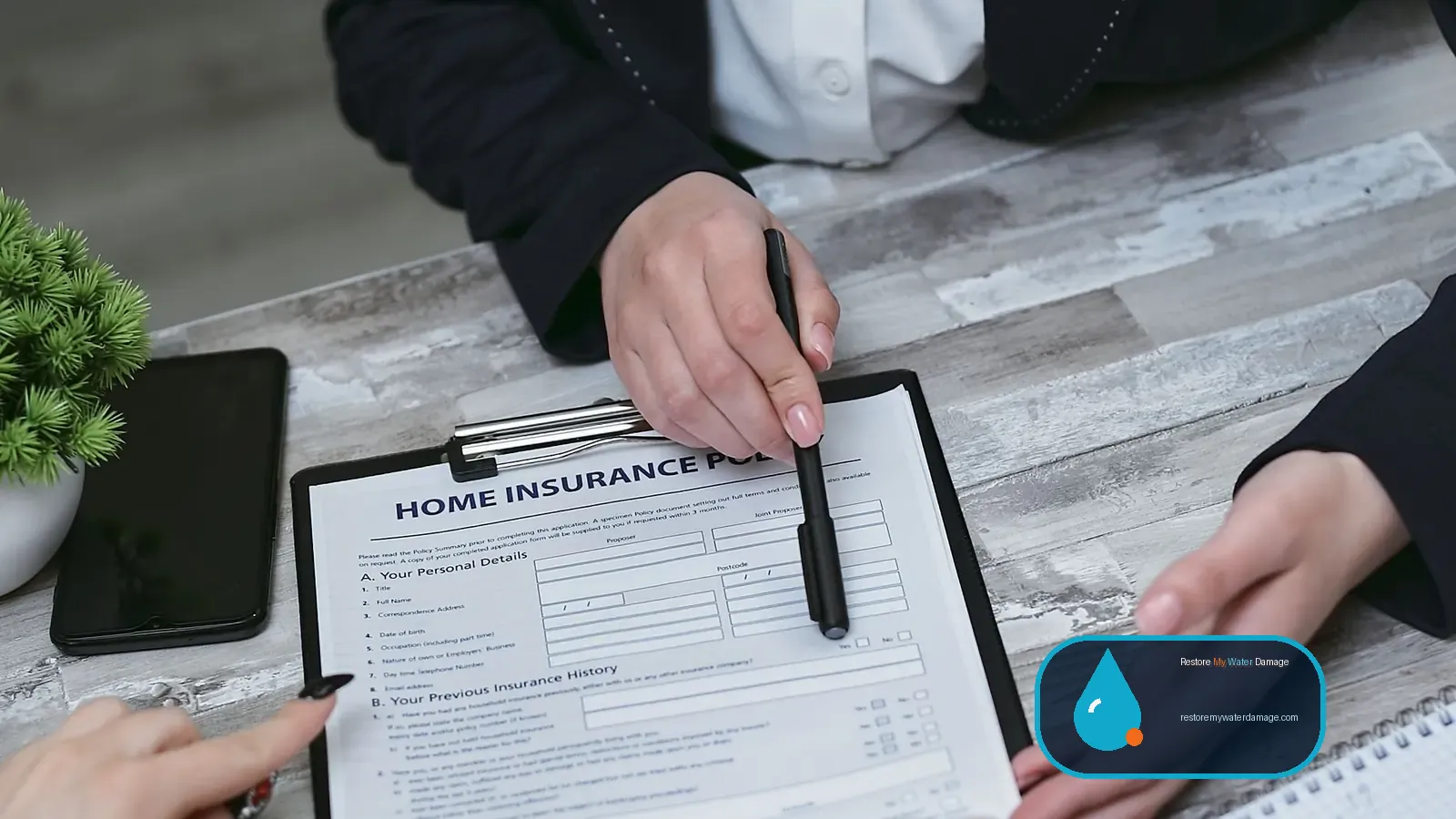
You do not need to be an expert to ask good questions. You just need to listen for whether the answers are specific. Here is a first-call script you can use, followed by what to listen for.
- "Is my address within your normal service area?" Listen for a clear yes and who will handle daily monitoring.
- "When can someone realistically arrive?" An honest estimate is better than an unrealistic promise.
- "Are your technicians trained in water damage restoration to IICRC standards?" Listen for specifics rather than "we've done this for years."
- "Do you carry general liability insurance, and can you send a certificate?" The answer should be yes without hesitation.
- "Do I need any specific licenses for this work in my area, and do you hold them?" Requirements vary by state and city, especially for rebuild and mold work.
- "How will you decide when my home is dry?" Look for mention of moisture readings, dry standards, and daily logs.
- "How do you bill, and do you work with insurance adjusters?" Ask what pricing system they use and whether you will get an itemized invoice.
- "What will you need to remove?" They may not know until the inspection, but they should explain how they decide.
- "Will you ask me to sign anything before starting?" Ask for a copy of any work authorization or assignment of benefits in advance.
Red flags when choosing a local company
Be cautious of any provider who will not give a company name or address on the phone, pressures you to sign an assignment of benefits before inspecting, promises that insurance will pay for everything, quotes a flat price without seeing the damage, or plans to dry the home without any moisture meters. These patterns are common in complaints about restoration work.
| Warning sign | Why it matters |
|---|---|
| No written estimate or scope | You cannot compare pricing or dispute charges later |
| No moisture readings or logs | No proof the structure is actually dry; insurers may question drying charges |
| Pressure to sign immediately | May give away control of your insurance claim |
| "Insurance will cover it all" | Nobody but your insurer can determine coverage |
| Only fans, no dehumidifiers | Moisture evaporates into the air and can migrate to other materials |
| Cannot provide proof of insurance | You may be exposed if a worker is hurt or property is damaged |
| Wants to install new drywall right away | Framing behind it may still be wet |
The complete guide to choosing a water damage restoration company expands on each of these points.
How do you compare water damage restoration companies near you?
Compare local restoration companies on documentation, equipment, training, communication, and the clarity of their written estimate, not just price. In a true emergency you may only have time for one call, so prioritize the vetting questions; if the loss is smaller or already stabilized, gathering two or three opinions is reasonable.
Price comparisons are tricky in restoration because the scope often changes once walls are opened or moisture mapping reveals a larger wet area. Many companies price using estimating software also used by insurance carriers, which lists line items like extraction per square foot, equipment per day, and demolition per linear foot. Comparing line items is more useful than comparing totals.
| Comparison factor | Company A | Company B | What to look for |
|---|---|---|---|
| Serves my address regularly | Yes, with named monitoring schedule | ||
| IICRC-trained technicians | Specific training described | ||
| Proof of liability insurance | Certificate provided | ||
| Required licenses | Verified with state or local authority | ||
| Written, itemized scope | Line items explained | ||
| Moisture logs provided | Daily readings shared with you | ||
| Handles repairs or refers out | Clear handoff plan either way |
If you want to understand what a fair price looks like before you compare, read the water damage restoration cost guide.
Checking reviews the right way
Read recent reviews for patterns rather than focusing on star averages. Useful reviews mention communication, whether technicians explained the drying process, billing surprises, and whether problems returned later. A few negative reviews are normal; the way a company responds to them often tells you more than the complaint itself.
Also look for reviews that describe losses similar to yours. A company praised for carpet cleaning is not necessarily experienced with a sewage backup or a flooded commercial space. Cross-check the business name on reviews with the name on the estimate and insurance certificate to make sure you are hiring the same company you researched.
Local water damage services by situation
The right local provider depends on what caused the damage and what kind of property you have. Use the pages below to understand what each situation requires, so you can describe it clearly when you call.
- Burst pipe water damage cleanup: usually Category 1 at first, but often involves ceilings and wall cavities.
- Basement water damage restoration: seepage, sump failure, or backups, with concrete that dries slowly.
- Sewage backup cleanup: Category 3, requiring PPE, containment, and removal of porous materials.
- Flood damage restoration: rising outside water, often widespread and handled differently by insurance.
- Storm and rain water damage: roof, window, and siding intrusion, sometimes with emergency tarping.
- Residential water damage restoration and commercial water damage restoration for property-specific needs.
Water damage restoration near me for renters and condo owners
Renters and condo owners should notify the landlord or association right away, because the building owner or association is often responsible for the structure while you are responsible for your belongings and, in condos, sometimes interior finishes. Your renters or condo policy may cover contents and additional living expenses. Check your lease, bylaws, and policy before authorizing work.
In multi-unit buildings, water rarely stays in one unit. A leak from an upstairs bathroom may damage the ceiling below, and a shared wall cavity can carry moisture into neighboring units. That often means multiple insurance policies are involved: the association master policy, the unit owner's policy, and possibly a neighbor's. Getting a single restoration provider to document the whole affected area, with consent from each party, helps keep claims straight.
What happens when a local restoration crew arrives?
On arrival, a qualified crew should confirm the water source is stopped, check for safety hazards, walk the affected area with you, take moisture readings and photos, explain the water category and drying plan, and get your written authorization before starting extraction. The first visit usually takes a few hours, depending on the size of the loss.
Knowing what a normal first visit looks like makes it easier to spot a provider who is cutting corners. The sequence below reflects common industry practice. The order can shift slightly, such as extracting urgently before finishing documentation when water is actively spreading, but every step should happen.
- Introductions and paperwork: the crew identifies the company, explains what they are there to do, and reviews any work authorization with you.
- Safety walk-through: they look for electrical hazards, ceiling sag, slip risks, and signs of contamination, and decide what protective equipment is needed.
- Source confirmation: they verify the leak is stopped or recommend a plumber, roofer, or appliance technician.
- Moisture mapping: they use meters and often a thermal camera to find where water traveled, including under flooring and inside walls.
- Documentation: they take photos of each affected area and record initial readings, including dry reference readings from unaffected materials.
- Explaining the plan: they tell you what can be dried in place, what must be removed, and roughly how long drying may take.
- Extraction and setup: they remove water, perform any necessary demolition, and place air movers and dehumidifiers.
- Next steps: they tell you when they will return for monitoring and how to reach them with questions.
Living with drying equipment
Drying equipment runs continuously and is noisy, produces warm air, and uses a meaningful amount of electricity. Leave equipment on and in place unless the technician tells you otherwise, because turning it off or moving it can slow drying and extend the job. Ask the crew which doors and windows to keep closed; opening windows in humid weather can work against dehumidifiers.
Keep children and pets away from cords and equipment, and let the crew know about circuit limits so breakers do not trip. If the equipment load is heavy, providers sometimes spread units across circuits or bring temporary power distribution. If you are not sure whether it is reasonable to stay in the home, especially with contamination or extensive demolition, ask; your policy may include additional living expense coverage.
How does location change the water damage you face?
Where you live shapes both the most likely causes of water damage and how quickly a building can be dried. Cold regions see more frozen pipes and ice dams, humid coastal areas see storm intrusion and slower drying, and river or low-lying areas see more flooding and basement seepage.
| Regional condition | Common water damage causes | What a local provider should account for |
|---|---|---|
| Cold winters | Frozen and burst pipes, ice dams, failed heat in vacant homes | Ceiling and wall cavity drying, heat to support evaporation |
| Hot, humid climate | Storm and hurricane intrusion, HVAC condensate leaks | Higher dehumidification capacity, fast mold prevention |
| River and low-lying areas | Floodwater, basement seepage, sewer backflow | Category 3 protocols, flood insurance documentation |
| Arid climate | Slab leaks, water heater failures, flash floods, roof leaks in monsoon season | Leak detection coordination, concrete and slab drying |
| Older housing stock | Aging galvanized or cast iron plumbing, plaster walls | Specialty drying for plaster and lath; possible lead or asbestos testing before demolition |
That last row matters more than many people realize. In older homes, materials like plaster, joint compound, vinyl flooring, and pipe insulation may contain asbestos, and paint may contain lead. A responsible provider will raise testing before cutting into suspect materials, as federal, state, and local rules can apply.
Asking about repairs up front
Ask early whether the local provider also handles rebuild work or refers it out. Neither answer is wrong, but you want to know who will replace drywall, flooring, and trim once the structure is dry, and whether that work requires a contractor license in your state. A single company can simplify scheduling and communication with your adjuster. Using separate companies can make sense if you already have a trusted contractor. Either way, make sure the rebuild does not start until final moisture readings confirm materials are dry. Our repair and restoration page explains the handoff.
What to do while you wait for a local restoration crew
While you wait, keep the water stopped, stay out of unsafe areas, photograph everything, move small valuables to a dry place, and remove easily reachable clean water with towels or a wet/dry vacuum. Avoid tearing out materials yourself unless there is a safety reason, because adjusters often want to see damage in place.
- Confirm the water is off at the fixture valve or the main shutoff.
- Shut off power to wet areas only if you can reach the breaker panel from a dry spot.
- Take wide shots of each room, then close-ups of the source and damaged items.
- Lift furniture off wet carpet using foil squares or wood blocks under the legs.
- Remove rugs, books, papers, electronics, and photographs from wet areas.
- Open interior doors and cabinets in clean-water situations to begin airflow.
- Do not turn on the HVAC system if water reached ducts or the air handler, or if the water is contaminated.
- Call your insurance carrier to report the loss and note the claim number.
Our printable water damage restoration checklist and the step-by-step guide on what to do after a water leak cover this in more detail.
Insurance considerations before the crew arrives
Most homeowners policies require you to take reasonable steps to prevent further damage, and professional extraction and drying are typically part of that. Coverage generally depends on the cause: sudden and accidental events are commonly covered, gradual leaks and outside flooding often are not. A separate flood policy, such as through the NFIP, is usually needed for rising water. Check your specific policy.
Keep receipts for anything you buy, such as a wet/dry vacuum, tarps, or a hotel stay. Ask the restoration provider for photos and moisture logs, because adjusters rely on them. If you are unsure what your policy covers, read water damage and homeowners insurance before signing any paperwork that assigns your insurance benefits.
What happens after local restoration is finished?
When drying is complete, the provider should show you final moisture readings that match dry reference materials, remove all equipment, and give you documentation. Then repairs begin, either by the same company or by a contractor you choose, and you should keep an eye out for any returning odor or staining.
Ask for a copy of the complete job file: initial photos, moisture maps, daily logs, equipment records, and the final invoice. If you ever sell the home, being able to show that a past water loss was professionally dried and documented can ease buyer concerns. If you notice musty smells, new stains, or warping in the weeks after the job, contact the provider promptly; it may indicate an area was missed.
It is also worth scheduling a quick follow-up check of any area that was dried in place, especially hardwood floors, cabinet bases, and walls near the original source. Materials can look fine on the surface while a small pocket stays damp. A single reading a few weeks later, compared with the final drying log, gives you confidence before you repaint, refinish floors, or put belongings back into storage areas.
Finally, address the cause so it does not happen again. Replace worn supply lines, service the water heater, test your sump pump, and consider leak sensors with automatic shutoff. The water damage prevention guide covers upgrades that give the most protection for the money.
Restore My Water Damage helps connect property owners with restoration providers and does not guarantee the availability, pricing, or performance of any individual company. Verify licensing, insurance, and scope directly with the provider you choose.
Frequently Asked Questions
How do I find water damage restoration near me?
Enter your ZIP code on this site or call (833) 435-4276 — we answer 24 hours a day, 7 days a week with providers that serve your area. You can also search maps listings, ask your insurance carrier for referrals, or ask a trusted plumber. Whatever route you use, confirm the company actually serves your address, has trained technicians, carries insurance, and can explain how it will measure drying.
Who offers water damage restoration near me?
Water damage restoration is offered by independent local restoration contractors, franchise locations of national brands, general contractors with mitigation divisions, and some carpet cleaning companies that have added water services. Their capabilities vary widely. A dedicated restoration provider will typically have commercial extractors, LGR or desiccant dehumidifiers, moisture meters, and thermal cameras rather than only carpet cleaning equipment.
Is it better to hire a local or national restoration company?
Either can do excellent work. What matters is the crew that shows up: their training, equipment, documentation, and communication. Local independents may offer more direct contact with the owner, while franchise locations may have standardized processes and larger equipment pools during regional disasters. Vet the specific location serving you, not just the brand name.
How far will a water damage restoration company travel?
Service radius varies by company, often based on how far technicians can reasonably travel for daily moisture checks and equipment adjustments. Drying jobs require return visits, so a company far outside its normal area may struggle to monitor your job properly. Ask directly whether your address is within their regular service area and who will do daily monitoring.
What should I ask a restoration company on the phone?
Ask whether your address is in their service area, when they can realistically arrive, whether technicians are trained to IICRC standards, whether they carry liability insurance, how they bill and whether they work with insurers, and how they document drying. Also describe the water source so they can bring appropriate equipment and protective gear for gray or black water.
Are online reviews enough to choose a local company?
Reviews help, but they should not be the only factor. Look for patterns in recent reviews, especially comments about communication, billing, and whether problems came back later. Then verify insurance, required licenses, and training directly. Some review profiles are filtered or incomplete, so a short phone conversation and a written scope often reveal more than star ratings.
Can I get emergency water damage restoration near me at night?
Yes. We offer 24/7 emergency response, including nights, weekends and holidays. During storms, when many properties are affected at once, arrival times can be longer, so call (833) 435-4276 as soon as you find water. While you wait, shut off the water, make the area electrically safe, and document the damage.
Should I use the company my insurance recommends?
You are generally allowed to choose your own restoration contractor, though you should check your policy and talk with your adjuster. Insurer preferred vendor programs can simplify billing, but you are not always required to use them. Whoever you choose, keep copies of the scope, photos, and moisture logs so your claim is well documented.
How much does water damage restoration near me cost?
Local pricing depends on the size of the affected area, water category, materials and drying time, plus regional labor costs. Nationally, typical water damage restoration jobs often fall between about $1,300 and $6,000, while small spills may cost a few hundred dollars and major floods much more. Get an itemized written estimate from the provider before work begins. Call (833) 435-4276 24/7 and we'll connect you with local help.
What does a local water damage restoration company do on the first visit?
On a first visit, a restoration crew typically inspects the damage, finds and stops the source, measures moisture in floors, walls and ceilings, and explains the scope. With your approval they extract water, remove unsalvageable materials and set drying equipment. They should document conditions with photos and readings for your insurance claim and return to check progress. Call (833) 435-4276 24/7 and we'll connect you with local help.
Do water damage restoration companies near me also handle repairs and rebuilding?
Many do, but not all. Some firms only do mitigation, meaning extraction, drying and demolition, and refer out reconstruction like drywall, flooring and cabinets. Others handle both. Ask up front, because using one company can simplify scheduling and insurance paperwork, while separate contractors may give you more pricing options. Check licensing requirements for rebuild work in your state.