What is water damage cleanup?
Water damage cleanup is the process of removing water, debris, and damaged materials from a property, then cleaning, sanitizing, and deodorizing what can be kept. It works hand in hand with extraction and drying. Drying deals with moisture; cleanup deals with contamination, mess, and the decisions about what stays and what goes.
Cleanup is where many do-it-yourself efforts go wrong. People scrub visible surfaces, spray bleach, and put furniture back while contamination remains inside carpet pad or wall cavities. Others throw out belongings that could have been saved, or keep items that absorbed sewage. A structured approach based on water category, material type, and time avoids both problems.
This page walks through how to assess the water, the safety gear needed, a step-by-step flooded room cleanup, what to save or discard, how cleaning and sanitizing actually work, and when water damage cleanup and restoration should be left to professionals. For the drying side, see water extraction and structural drying.
How do you know how contaminated the water is?
Start with the source: water from a supply line or faucet is usually Category 1 (clean), water from appliances or a toilet with urine only is Category 2 (gray), and sewage, toilet water with feces, or rising outdoor floodwater is Category 3 (black). Time and contact with dirty materials can make any water more contaminated, so a leak that sat for days should not be treated as clean.
| Category | Common sources | Health risk | Cleanup approach |
|---|---|---|---|
| Category 1: clean water | Broken supply line, sink or tub overflow with no contaminants, melting ice, rainwater entering directly | Low at first, increases with time | Extract, dry quickly, clean surfaces; many materials can be dried in place |
| Category 2: gray water | Washing machine or dishwasher discharge, toilet overflow with urine only, aquarium, sump pump failure with some contamination | Moderate; can cause illness if ingested or with prolonged contact | Remove carpet pad, clean and treat carpet and hard surfaces, antimicrobial application, dry |
| Category 3: black water | Sewage backup, toilet backflow with feces, rising river or storm floodwater, water that has sat long enough to support microbial growth | High; pathogens and possibly chemicals | PPE, containment, removal and disposal of porous materials, thorough cleaning and disinfection, drying |
These categories come from the IICRC S500 standard and are explained further in water damage categories explained and clean vs. gray vs. black water.
Why time changes the category
Clean water does not stay clean once it hits a building. It picks up dirt, dust, and residues from carpet, subfloor, and wall cavities. Warmth and darkness let bacteria multiply. Water that started as Category 1 can degrade to Category 2 within a day or two, and to Category 3 if left long enough. That is why the professional assessment considers how long water has been present, not just where it came from.
Odor is a practical clue. A musty, sour, or sewage-like smell suggests microbial growth or contamination, even if the source was a clean pipe. When in doubt, treat the water as the more contaminated category and protect yourself accordingly.
What safety precautions does water cleanup require?
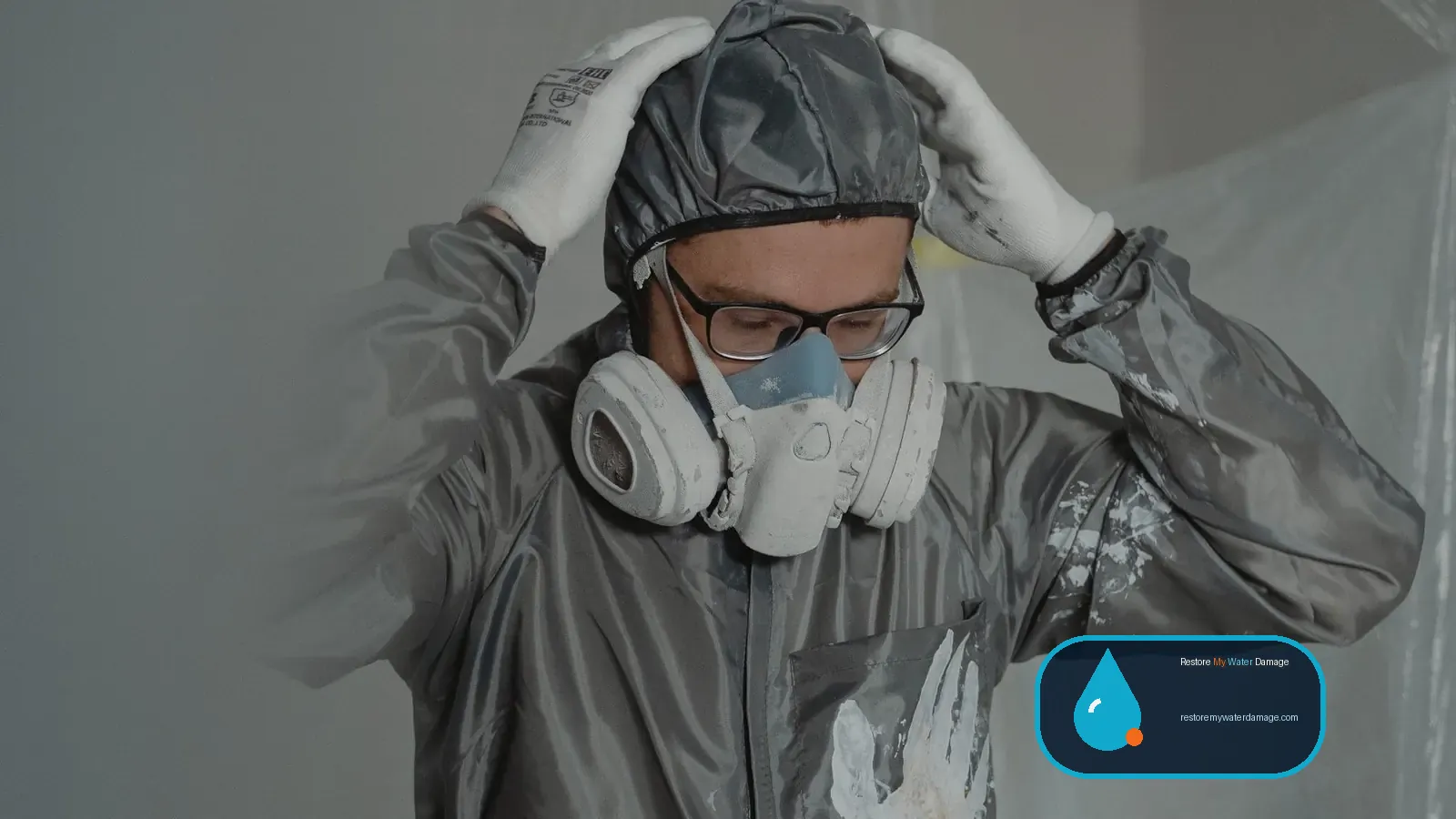
Before cleanup, make sure electricity to wet areas is off, ceilings are stable, and you have protective gear matched to the water category. For any gray or black water, wear waterproof gloves, rubber boots, and eye protection; for sewage, floodwater, or visible mold, add a properly fitted respirator such as an N95 at minimum and protective clothing you can remove and wash or discard.
- Electrical: do not step into water that may be energized. Shut off power at the panel only from a dry location, or call an electrician or the utility.
- Structural: stay out from under sagging ceilings. Look for bowed walls or floors that feel soft.
- Gas and carbon monoxide: leave if you smell gas. Never run generators, gas-powered pumps, or pressure washers indoors or in attached garages.
- Chemicals: do not mix cleaners, especially bleach with ammonia or acidic products, which can create toxic gases.
- Lifting: wet drywall, carpet, and furniture are heavy. Cut carpet into strips and use help.
- Sharp debris: floodwater can hide nails, glass, and broken materials. Wear sturdy boots.
- Hazardous building materials: in older homes, test suspect materials for asbestos and lead before tearing out plaster, flooring, or pipe insulation.
- Hygiene: wash hands thoroughly after cleanup and before eating, keep wounds covered, and seek medical advice if a wound was exposed to floodwater or sewage.
How do you clean up a flooded room step by step?
Make the room safe, document the damage, remove standing water, clear out contents, remove wet materials that cannot be dried or decontaminated, clean and sanitize surfaces, then dry the room completely with air movers and dehumidification before any repairs. The order matters: cleaning before removing wet pad or drywall just spreads contamination around.
- Stop the source and confirm the electrical hazard is handled.
- Put on protective gear appropriate to the water category.
- Document everything with photos and video before moving anything, including water lines on walls.
- Remove standing water with a pump, liquid-rated wet/dry vacuum, or professional extractor.
- Move contents out of the room to a dry, ventilated area for sorting.
- Pull back or remove carpet. Remove wet pad in most cases; remove carpet too after Category 3 exposure.
- Remove baseboards carefully to check the wall bottom and allow airflow; label them if you plan to reinstall.
- Check drywall and insulation. Remove saturated, sagging, or contaminated drywall, typically with a straight cut above the highest wet point, and remove wet insulation.
- Shovel out mud and debris after floods, then rinse hard surfaces where appropriate.
- Clean all hard surfaces with detergent and water, working from top to bottom.
- Disinfect non-porous surfaces after Category 2 or 3 water with an appropriate product used exactly per its label.
- Dry the structure with air movers and a dehumidifier, keeping the room closed if the air outside is humid.
- Verify dryness with a moisture meter, comparing with unaffected materials, before closing walls or installing flooring.
- Deodorize only after sources of odor, such as wet pad or contaminated drywall, are removed.
Cleaning up a flooded room vs. a flooded basement
Basements add complications: water may be deeper, electrical panels and appliances like furnaces and water heaters are often located there, concrete dries slowly, and water may be coming from groundwater, a sump failure, or a sewer backup. Pumping deep water too fast can create pressure imbalances with saturated soil outside the walls, so floodwater should be removed gradually when the ground outside is still waterlogged. See basement water damage restoration for basement-specific guidance.
What can be saved and what should be thrown away?
Whether something can be saved depends on three factors: how porous it is, how contaminated the water was, and how long it stayed wet. Non-porous items like metal, glass, and hard plastic can usually be cleaned and disinfected. Porous items like mattresses, pad, and insulation that absorbed sewage or floodwater usually must be discarded.
| Material or item | Clean water, addressed quickly | Gray water | Black water (sewage, floodwater) |
|---|---|---|---|
| Carpet | Often dried and saved | Often cleaned and saved; evaluate | Discard |
| Carpet pad | Sometimes dried; often replaced | Replace | Discard |
| Drywall | Often dried in place if intact | Evaluate; often cut and removed where wet | Remove above wet line |
| Insulation (batt or blown) | Usually removed if saturated | Remove | Remove |
| Solid wood furniture | Dry slowly, clean | Clean and disinfect; evaluate | Clean and disinfect or discard depending on condition |
| Upholstered furniture | Professional cleaning and drying | Professional evaluation | Usually discard |
| Mattresses and pillows | Evaluate; often replaced | Usually discard | Discard |
| Clothing and linens | Launder | Launder with hot water and appropriate detergent | Launder if washable and appropriate; otherwise discard |
| Hard plastic, metal, glass, ceramics | Clean | Clean and disinfect | Clean and disinfect |
| Food, medications, cosmetics | Discard if packaging was wet | Discard if contacted | Discard |
| Paper documents and photos | Freeze or air dry; professional document drying | Freeze; professional evaluation | Professional evaluation for irreplaceable items; otherwise discard |
| Electronics and appliances | Do not power on; professional evaluation | Professional evaluation | Professional evaluation; often replaced |
Before you throw anything away, photograph it, record brand and model information where possible, and check whether your adjuster wants to see it. If an item is a health hazard and must go immediately, document it thoroughly first. Our insurance claims guide explains how to build a contents inventory.
Hard flooring after water damage
Ceramic and porcelain tile usually survive water damage, although grout can hold contamination and the subfloor underneath may be wet. Laminate and many engineered floors swell at the seams and often cannot be restored. Luxury vinyl plank resists water on its surface but traps water beneath it, so it is frequently lifted to dry the subfloor. Solid hardwood can sometimes be dried in place with specialty equipment if action is fast, but cupping and finish damage are common.
How does cleaning and sanitizing work after water damage?
Effective cleaning removes soil and contamination physically first, using detergent, water, and agitation, and only then applies a disinfectant or antimicrobial to non-porous surfaces according to its label. Disinfectants do not work well on dirty surfaces and do not fix contaminated porous materials, which is why removal comes before sanitizing.
Professionals often describe cleaning with a set of principles: remove contamination, contain it so it does not spread, and use appropriate cleaning methods, time, temperature, and chemistry. In practice that means working from clean areas toward dirty ones, from top to bottom, and bagging debris right away rather than dragging it through the house.
Cleaning methods by surface
- Hard, non-porous floors: remove debris, wash with detergent and water, rinse, then disinfect if the water was Category 2 or 3.
- Exposed framing: after drywall removal, clean studs and plates to remove residue, apply antimicrobial where appropriate, and dry to target moisture content.
- Concrete: scrub with detergent, rinse with a wet vacuum, and allow extended drying; concrete is porous and can hold odor and contamination.
- Cabinets: remove toe kicks and check under bases; particleboard that swelled or absorbed contaminated water usually needs replacement.
- HVAC: if contaminated water or heavy debris entered ductwork or the air handler, have the system evaluated and cleaned before running it.
- Contents: restoration contractors may use ultrasonic cleaning for hard items, specialized textile cleaning, and professional document drying.
About bleach and antimicrobials
Bleach is often overused after water damage. It can disinfect hard, non-porous surfaces when used properly, but it does not penetrate wood or drywall, it gives off irritating fumes, and it becomes dangerous if mixed with ammonia or acids. EPA mold guidance emphasizes that removing moisture and physically removing contaminated materials matters more than applying biocides.
Professional restorers typically use antimicrobials selected for the job and applied according to label directions. Whatever product is used, follow the label for dilution, dwell time, ventilation, and protective equipment. Ask your provider what product they are applying and request its safety data sheet if you have sensitivities.
Removing odor
Lingering odor after water damage usually means a source is still present: wet pad, damp framing, contaminated drywall, or microbial growth. Air fresheners only mask it. Remove the source, clean, and dry thoroughly. For stubborn odors, professionals may use thermal fogging, hydroxyl generators, or ozone in unoccupied spaces. Ozone is hazardous to people, pets, and plants and should only be used by trained providers in vacated areas.
When should you hire a professional for water cleanup?
Hire a professional when the water is gray or black, when more than a small area is affected, when water reached drywall, subfloor, insulation, or a basement, when it has been present more than a day or two, or when anyone in the home is medically vulnerable. Small, fresh, clean-water spills on hard floors are usually reasonable DIY jobs.
| Situation | Reasonable DIY? | Why |
|---|---|---|
| Sink overflow on tile, cleaned up within an hour | Usually yes | Clean water, non-porous surface, quick response |
| Water heater leak soaking a carpeted room | Professional recommended | Pad saturation, wall wicking, drying verification |
| Dishwasher leak under cabinets and laminate floor | Professional recommended | Gray water, hidden subfloor moisture, cabinet bases |
| Toilet overflow with feces | Small, contained on tile: possibly with PPE; otherwise professional | Category 3 contamination |
| Sewer backup in basement | Professional | Pathogens, PPE, containment, disposal |
| Outside floodwater in living areas | Professional | Category 3, extensive removal, insurance documentation |
| Visible mold after water damage | Small areas under about 10 square feet may be DIY per EPA guidance; larger areas professional | Spore disturbance, hidden growth |
A professional water damage cleanup and restoration provider brings extraction equipment, moisture meters, protective gear, containment materials, commercial cleaning agents, and experience deciding what can be saved. They also provide documentation that insurers rely on. If you need someone quickly, see emergency water damage restoration or water damage restoration near me, or call (833) 435-4276 — we answer 24 hours a day, 7 days a week.
What a professional cleanup visit includes
A professional cleanup visit typically begins with a safety assessment and water category determination, followed by setting up containment if contamination is present, extracting water, and sorting contents with you. Crews remove and bag unsalvageable materials, clean and treat surfaces, and set up drying equipment. You should receive photos, a list of removed materials and discarded contents, product information for any antimicrobials used, and moisture readings.
Ask the crew to walk you through each decision about what is being removed. A good provider explains why pad is coming out, why drywall is being cut at a particular height, or why a piece of furniture is not worth restoring. You remain in control of your belongings, and those explanations also help when your adjuster reviews the claim.
Cleaning up in multi-unit and rental properties
Renters should notify the landlord right away and avoid making structural removals without permission, although reasonable steps to protect belongings and prevent further damage are generally expected. Condo owners should contact the association, since the master policy may cover some building elements. In either case, water often crosses unit lines, so coordinated cleanup of all affected units prevents one unit's damp wall cavity from causing problems next door.
Water cleanup by source
Each source of water brings its own cleanup priorities. The overview below summarizes the most common situations, with links to detailed pages.
Burst pipes and supply lines
These typically start as Category 1 but can release large volumes, often inside walls or ceilings. Cleanup focuses on removing wet ceiling drywall and insulation, extracting water from floors below, and drying cavities. Frozen pipe bursts often happen in multiple places, so check the whole run. Details are on burst pipe water damage cleanup.
Appliance leaks
Washing machines and dishwashers discharge gray water. Refrigerator ice maker lines and water heaters usually release clean water but often go unnoticed under appliances and cabinets. Pull the appliance out, check the subfloor, and inspect adjacent cabinet bases and walls for wicking.
Sewage backups
Sewage is Category 3 and requires stopping all water use until a plumber clears the line, then containment, removal of porous materials, thorough cleaning and disinfection, and drying. See sewage backup cleanup.
Floods and storms
Floodwater carries mud, sewage, fuel, and chemicals. Cleanup involves shoveling out silt, removing drywall and insulation above the flood line, cleaning and disinfecting framing, and extensive drying. Wind-driven rain through roofs and windows may start cleaner but often soaks insulation and ceilings. See flood damage restoration and storm and rain water damage.
How do you prevent mold during water damage cleanup?
Prevent mold by removing water and wet porous materials quickly, drying the structure within roughly 24 to 48 hours where possible, keeping indoor humidity low with dehumidification, and not closing up walls or reinstalling flooring until moisture readings confirm materials are dry. Mold needs moisture to grow, so moisture control matters more than any cleaning product.
Mold spores are present nearly everywhere indoors and out. They become a problem when they land on damp organic materials such as drywall paper, wood, carpet backing, cardboard, and dust. Warm temperatures and still, humid air speed growth. That is why cleanup and drying are really one continuous effort: a room that is spotless but still damp inside the walls can grow mold behind the paint.
- Get wet porous materials out fast when they cannot be dried quickly, especially pad, insulation, and cardboard boxes.
- Keep humidity down. A dehumidifier running in a closed room is more effective than open windows on a humid day.
- Do not trap moisture. Leave baseboards off and cavities open until readings confirm dryness.
- Clean before you dry sealed spaces. Dust and residue feed mold.
- Watch storage areas. Closets and boxed items near the wet area are common spots for surprise growth.
What if mold is already growing?
If you see fuzzy or discolored growth, or smell a strong musty odor, do not dry-brush or sand it, and do not blast it with fans, which spreads spores. EPA guidance suggests that areas smaller than about 10 square feet may be cleaned by a homeowner with appropriate protection, while larger areas, growth in HVAC systems, or growth caused by contaminated water are best handled by professionals following the IICRC S520 standard.
Professional mold remediation uses containment with plastic sheeting, negative air pressure with HEPA filtration, removal of affected porous materials, HEPA vacuuming, and cleaning of remaining surfaces. The underlying moisture problem must be fixed first, or growth will return. See mold and water damage for more detail.
Water damage cleanup checklist
Use this checklist to make sure nothing is missed between the first hour and the start of repairs. Check off each item as you go and keep the list with your insurance documents.
| Stage | Task | Done |
|---|---|---|
| Safety | Water source stopped; power to wet areas off; ceilings checked; PPE on | |
| Documentation | Photos and video of source, rooms, water lines, belongings | |
| Assessment | Water category identified; time since water began noted | |
| Water removal | Standing water pumped or extracted | |
| Contents | Belongings moved, sorted into keep, clean, and discard; discards photographed and listed | |
| Materials | Wet pad, insulation, and unsalvageable drywall and flooring removed | |
| Cleaning | Hard surfaces washed top to bottom; framing cleaned | |
| Sanitizing | Disinfectant or antimicrobial applied per label for Category 2 or 3 | |
| Drying | Air movers and dehumidifier running; readings taken daily | |
| Verification | Materials match dry reference readings | |
| Insurance | Claim reported; receipts, photos, and logs saved | |
| Prevention | Root cause repaired |
A more detailed, printable version is available in the water damage restoration checklist.
How much does water damage cleanup cost?
Water damage cleanup costs vary widely by category, area, and materials removed; commonly reported national ranges run from a few hundred dollars for small clean-water cleanups to many thousands for sewage or flood cleanup with demolition and disposal. Contaminated water usually costs more per square foot because of protective equipment, containment, disposal, and disinfection.
Typical line items include extraction per square foot, carpet and pad removal, drywall removal per linear or square foot, debris disposal, antimicrobial application, containment setup, protective equipment, contents handling, and drying equipment per day. These figures are general industry estimates, not quotes. Ask for an itemized estimate and read the water damage restoration cost guide for more detail.
Insurance and cleanup
Standard homeowners policies commonly cover cleanup for sudden and accidental water losses, but often exclude gradual leaks, poor maintenance, and flooding from outside surface water. Flood coverage generally requires a separate policy, such as through the NFIP, and sewer backup often requires an endorsement. Check your specific policy, report quickly, and document before discarding. Our guide to water damage and homeowners insurance covers common exclusions.
Cleanup supplies worth having on hand
A basic kit makes small cleanups faster and safer: a liquid-rated wet/dry vacuum, waterproof gloves, rubber boots, safety glasses, N95 respirators, heavy-duty contractor bags, a utility knife, a pry bar for baseboards, buckets, a squeegee, unscented detergent, a label-approved disinfectant, a pin moisture meter, and a dehumidifier. Store them together near your main water shutoff so you are not searching during an emergency.
What happens after cleanup is finished?
After cleanup and drying, confirm with moisture readings that materials are dry, then begin repairs: insulation, drywall, paint, trim, flooring, and cabinetry. Watch for returning odors, stains, or warping in the following weeks, which can signal missed moisture.
Keep the documentation from your cleanup, including photos, disposal lists, product information, and moisture readings. If you hired a professional, ask for a final report. Then fix the cause. A replaced supply line, a new sump pump with a battery backup, a backwater valve for sewer backups, or improved grading and gutters can prevent a repeat. The water damage prevention guide covers the options, and the water damage repair and restoration page explains the rebuild phase.
Cleaning and safety information on this page is general. Follow product labels, local health department guidance, and your restoration professional's advice for your specific situation.
Frequently Asked Questions
What is water damage cleanup?
Water damage cleanup is the work of removing water, mud, and debris; deciding which materials and belongings can be saved; removing unsalvageable materials; and cleaning, sanitizing, and deodorizing affected areas. It overlaps with extraction and drying but focuses on contamination and hygiene. The level of cleaning depends on the water category, with sewage and floodwater requiring the most thorough removal and sanitizing.
How do I clean up a flooded room?
Make the room electrically safe, stop the water, and document the damage. Remove standing water with a liquid-rated wet/dry vacuum or professional extraction, take out wet rugs and contents, remove soaked carpet pad and baseboards as needed, clean hard surfaces, and dry the room with air movers and a dehumidifier. If the water was sewage or outside floodwater, wear protective gear or hire professionals.
Should I use bleach for water damage cleanup?
Bleach is not the answer for most water damage. It does not penetrate porous materials like drywall or wood, it can be harmful to breathe, and it must never be mixed with ammonia or other cleaners. Hard, non-porous surfaces can be cleaned with detergent and water and then disinfected with a product used according to its label. Contaminated porous materials generally need to be removed.
What should be thrown away after water damage?
After sewage or floodwater, discard porous items that absorbed the water, such as carpet pad, mattresses, upholstered furniture, stuffed toys, insulation, and paper goods, along with any food, cosmetics, or medications that contacted the water. After clean-water leaks addressed quickly, many items can be dried and cleaned. Photograph and list discarded items for insurance before disposal.
Can carpet be saved after water damage?
Carpet can often be saved after a clean-water leak if it is extracted and dried promptly and has not delaminated. Carpet pad is inexpensive and frequently replaced. After gray water, pad is usually replaced and carpet professionally cleaned. After sewage or floodwater, carpet and pad are generally discarded because they cannot be reliably decontaminated.
How long does water damage cleanup take?
A small clean-water cleanup might be handled in a day, with drying continuing for several more. A flooded room with carpet removal, cleaning, and drying commonly takes several days. Sewage and flood cleanups take longer due to containment, removal of porous materials, and sanitizing. Repairs and rebuild come afterward and can add days to weeks.
Is it safe to clean up sewage myself?
Sewage contains bacteria, viruses, and parasites, and cleanup exposes you to splashes and contaminated aerosols. Very small, contained toilet overflows may be manageable with gloves, boots, eye protection, and careful disinfection. Sewer backups that spread across floors, soak carpet or drywall, or reach a basement are best handled by trained professionals with proper protective equipment and containment.
Does insurance pay for water damage cleanup?
Cleanup is often covered when the underlying loss is covered, such as a sudden pipe burst under a standard homeowners policy. Gradual leaks and outside flooding are commonly excluded, and flooding usually requires a separate flood policy. Sewer backup often needs a specific endorsement. Check your policy, report the loss quickly, and keep photos and receipts.
How much does water damage cleanup cost?
Typical national ranges for water damage cleanup run from a few hundred dollars for a small clean water spill to several thousand dollars for a flooded room or basement needing extraction, material removal and multi-day drying. Contaminated water, mold, larger areas and specialty flooring increase costs. Pricing varies by job and is set by the independent provider after inspection. Call (833) 435-4276 24/7 and we'll connect you with local help.
What equipment do I need for water damage cleanup?
For a small cleanup, a wet/dry vacuum, fans, a dehumidifier, gloves, boots, a mask and a basic moisture meter help. Larger jobs usually need truck-mounted or portable extractors, commercial air movers, low-grain refrigerant dehumidifiers and professional meters to confirm drying. Household fans alone often leave moisture trapped in walls and subfloors, which can lead to mold.
How do I clean up water under laminate or hardwood flooring?
Water trapped under laminate or hardwood rarely dries with surface fans. Laminate usually swells and must be removed. Hardwood can sometimes be saved using specialized floor drying mats and dehumidifiers if drying starts quickly, but cupping may remain. Check the subfloor with a moisture meter, since hidden moisture under flooring is a common source of mold. Call (833) 435-4276 24/7 and we'll connect you with local help.
Can I use a shop vac for water damage cleanup?
A shop vac works well for removing small amounts of standing water from hard floors and shallow puddles on carpet. It cannot pull water out of carpet pad, subfloors or wall cavities as effectively as professional extraction equipment. Do not use one on sewage, and keep it away from electrical hazards. Follow up with dehumidification and moisture checks.
When is water damage cleanup too big to do yourself?
Call professionals when water covers more than a small room, has soaked into walls or under flooring, involves sewage or floodwater, has been sitting over 24 to 48 hours, or when ceilings are sagging or electrical systems are wet. Hidden moisture is hard to find without meters, and incomplete drying often leads to mold and higher repair costs. Call (833) 435-4276 24/7 and we'll connect you with local help.