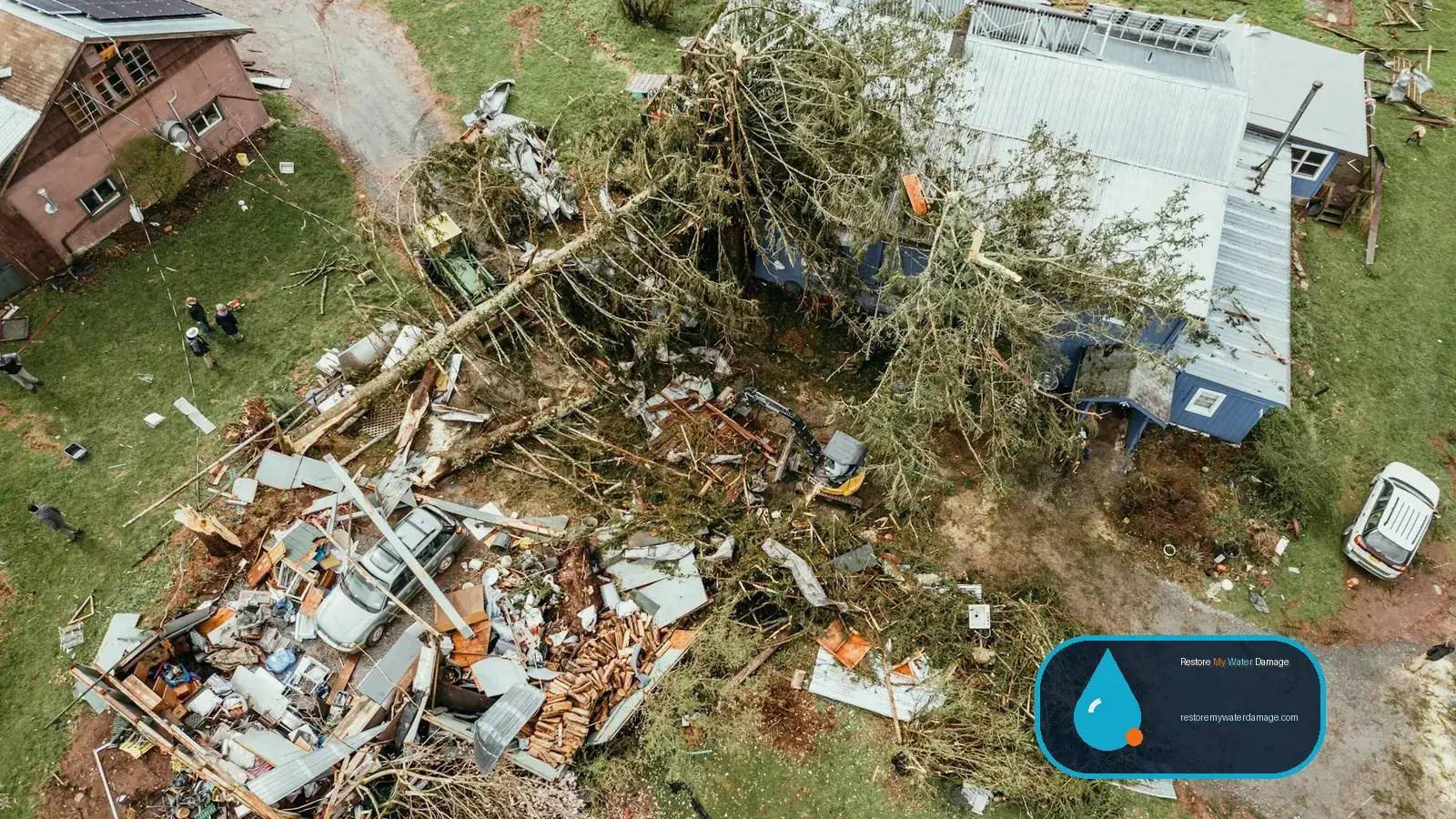
In Garland and Rowlett, some of the most serious water losses start on the roof. Severe thunderstorms, hail and high winds can tear shingles, break windows and open a building to rain in minutes, and the resulting damage often reaches insulation, ceilings and wall cavities before anyone can get a tarp in place. Restore My Water Damage connects homeowners, landlords and business owners in both cities with water damage restoration help for storm intrusion, burst pipes, appliance leaks and flooding.
The two cities sit on the east side of the Dallas area, with Rowlett stretching along Lake Ray Hubbard and Garland home to a large base of established neighborhoods and industrial property. Much of the housing was built between the 1960s and 1980s on concrete slabs, and the area drains through creeks such as Duck Creek and Rowlett Creek. Expansive clay soils are common, and hard freezes, while infrequent, do happen.
Effective restoration means stopping water entry, extracting what has collected, and tracing moisture through ceilings, walls and flooring with meters and thermal tools before drying. If water is coming in now, visit our emergency water damage restoration page or call (833) 435-4276. Coverage, availability and pricing depend on the matched provider and the scope found on site.

Water Damage Restoration Services in Garland
Water damage restoration in Garland / Rowlett covers the full sequence from the first call to the final repair: stopping the damage, removing water, drying the structure to measurable dry standards, cleaning affected materials and rebuilding what cannot be saved. Every job is different, so the scope is set after an on-site inspection, not over the phone.
Emergency Water Damage Cleanup
The first hours matter most. Standing water spreads into drywall, subfloors and cabinets, and wet materials can support mold growth within roughly 24–48 hours. Emergency work focuses on safety checks, stopping further damage and getting extraction started. Learn more about emergency water damage restoration.
Water Extraction and Structural Drying
Extraction removes liquid water far faster than evaporation ever could. Drying then uses air movers and dehumidifiers placed according to moisture readings, with daily monitoring until materials reach their dry goals. See water extraction and structural drying.
Water Damage Repair and Restoration
Once the structure is dry, damaged drywall, baseboards, flooring, cabinets and paint are repaired or replaced. Some property owners use one company for both mitigation and rebuild; others hire a separate contractor. Read about water damage repair and restoration.
Fire and Water Damage Restoration
After a fire, water from sprinklers and hoses often causes as much damage as the flames. Drying and soot cleanup must be coordinated so moisture does not set smoke residue deeper into materials. See fire and water damage restoration.
Mold-Related Water Damage
When water has been present long enough for mold to grow, the job follows containment and removal practices described in the IICRC S520 standard. Ask whether mold remediation is available for your address when you call. More on mold and water damage.
Common Causes of Water Damage in Garland
Across Texas, the most common drivers of water damage are flash flooding, severe spring storms, hail-damaged roofs and occasional hard freezes. The local factors specific to Garland / Rowlett are covered below.
Tornadoes, wind and roof breaches
The December 26, 2015 tornado that struck Garland and Rowlett is a clear reminder that North Texas severe weather is not limited to spring. That storm destroyed and damaged many homes, and it showed how quickly wind damage turns into water damage: once roofing, decking or windows are compromised, rain follows the openings into attics, insulation and wall cavities. Even far less severe straight-line winds can lift shingles and flashing enough to cause leaks. The first priority after any wind event is making the structure weathertight with tarping or board-up, then removing saturated insulation and ceiling materials that cannot dry effectively. Wet insulation in an attic can hold moisture against drywall and framing for days. Our storm and rain water damage page walks through that process.
Spring hail and wind-driven rain
Hail is a recurring threat across the Dallas area in spring. Hail bruises and cracks shingles, breaks skylights, dents gutters and damages window seals and siding, and those small openings may not leak until the next heavy rain. Wind-driven rain can also push water past door thresholds and window frames on the storm-facing side of a house. Ceiling stains, peeling paint near windows or damp attic insulation after a hailstorm are signs worth checking before the damage spreads.
Aging plumbing in 1960s-1980s slab homes
Garland and much of Rowlett were built out during the decades when slab-on-grade construction with under-slab plumbing was standard. Homes from this period may still have galvanized supply lines or original cast iron drain lines beneath the slab, and both deteriorate with age. Expansive clay soils that swell and shrink with rainfall and drought add stress to buried pipes and foundations. Slab leaks can push moisture into flooring across several rooms before they are obvious. During Winter Storm Uri in February 2021, attic and exterior-wall pipes in homes like these froze and split across the region. For sudden breaks, see burst pipe water damage cleanup.
Lake Ray Hubbard shoreline and creek drainage
Rowlett's shoreline along Lake Ray Hubbard includes homes with backyards sloping toward the water, boathouses, docks and retaining walls. Heavy rain moves quickly across yards and streets toward the lake and through local drainage such as Duck Creek in Garland and Rowlett Creek. Properties in low areas near these channels can take on runoff through garages and patio doors, and that water is considered contaminated. Porous materials it touches are usually removed and the area sanitized. Our flood damage restoration page covers what that involves.
Manufacturing and industrial buildings
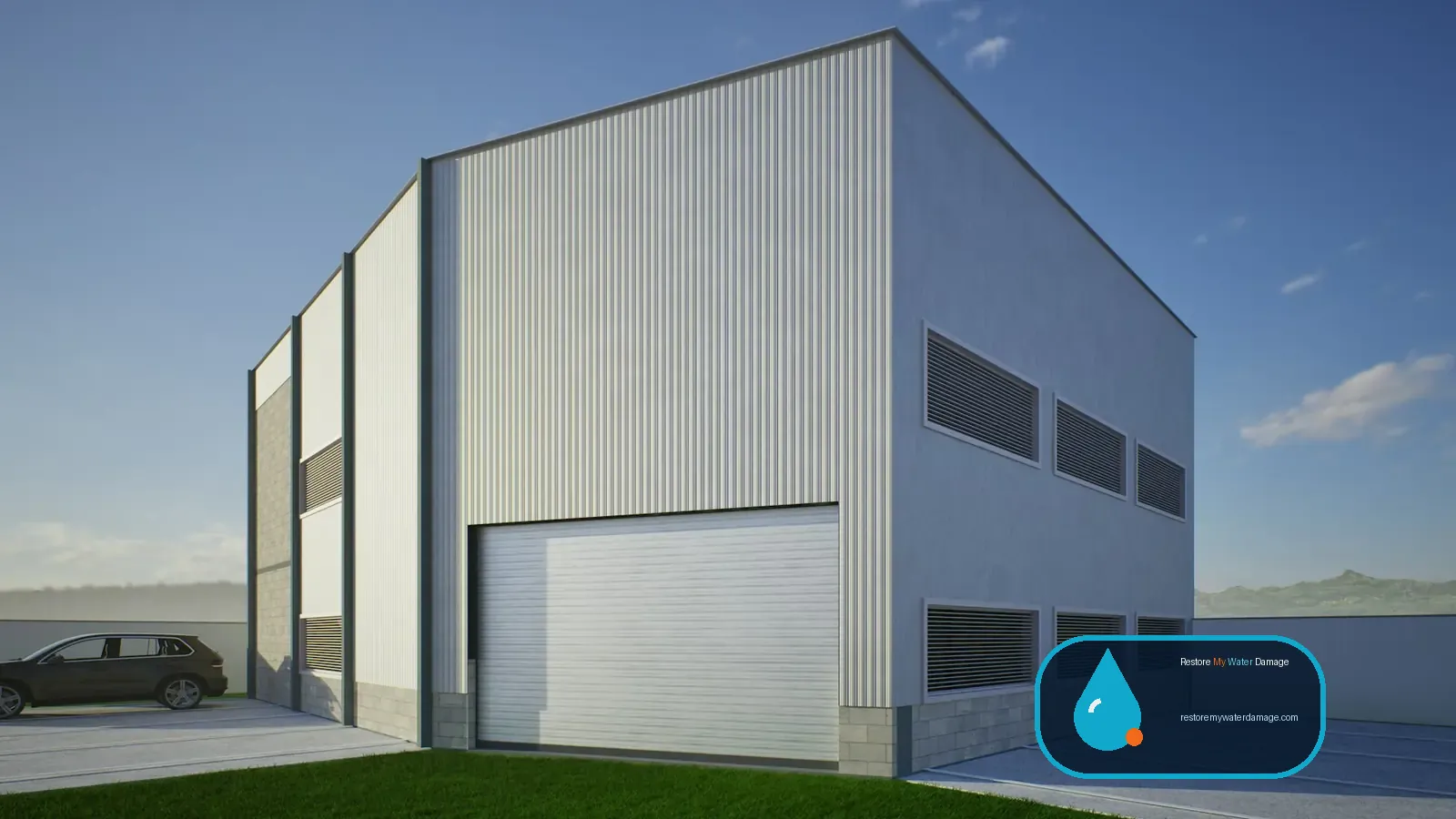
Garland has a substantial manufacturing and industrial base. Large tilt-wall and metal buildings with low-slope roofs, roof drains, fire sprinkler systems and process water lines face their own risks: clogged roof drains during downpours, sprinkler line breaks during freezes, and leaks that reach inventory, equipment or electrical systems. These losses require fast extraction, containment around production areas, and moisture documentation suitable for commercial insurers. Older industrial buildings may also have roof membranes that have been patched many times, and seams around rooftop equipment and skylights are frequent leak points. Water that reaches concrete floors can travel under wall bases and into offices, break rooms and storage areas, so moisture checks should extend beyond the obvious wet zone. Our commercial water damage restoration page explains the commercial process in more depth.
Burst or Frozen Pipes
Cold snaps can freeze water in exterior walls, crawl spaces, garages and attics. Ice expands, the pipe splits, and the leak often appears only after thawing. Keep the main shutoff location known, insulate vulnerable runs and let a trickle run from exposed faucets during hard freezes.
Appliance and Plumbing Leaks
Water heaters, dishwashers, ice-maker lines, washing machines and toilet supply lines fail in every market. These are usually Category 1 (clean) water at first, but water that sits or contacts flooring and debris can degrade to Category 2 or 3.
Slab, Crawl Space and Foundation Moisture
Most homes here sit on slabs or crawl spaces rather than full basements. Water under flooring or in a crawl space is easy to miss and needs moisture meters or thermal imaging to find.
Sewer or Drain Backups
Tree roots, grease, collapsed lines and heavy rain overwhelming municipal systems can push sewage back into a property. This is Category 3 water and requires protective equipment and removal of affected porous materials. See sewage backup cleanup.
Types of Water Damage We Handle
Restoration professionals classify water by contamination level using the IICRC S500 categories, because the category decides what can be dried in place and what must be removed.
| Category | Typical sources | What it means for restoration |
|---|---|---|
| Clean water (Category 1) | Broken supply lines, faucet overflows, fresh rain intrusion | Most materials can often be dried in place if work starts quickly |
| Gray water (Category 2) | Washing machine or dishwasher discharge, toilet overflow without feces | Carpet pad and some porous materials usually removed; cleaning and antimicrobial treatment |
| Black water (Category 3) | Sewage, rising floodwater, water standing long enough to grow bacteria | Porous materials generally removed; PPE and containment required |
For a deeper explanation, read water damage categories explained.
The Water Damage Restoration Process
A professional restoration job in Garland follows the same measurable sequence used nationally. The details of each step change with the size of the loss and the materials involved.
1. Emergency Assessment
The technician confirms the water source is stopped, checks electrical and structural hazards, identifies the water category and drying class, and photographs conditions before work begins.
2. Water Removal / Extraction
Truck-mounted or portable extractors remove standing water from floors, carpet and pad. Thorough extraction can shorten drying time by days.
3. Moisture Detection
Pin and pinless moisture meters, thermo-hygrometers and thermal cameras map where water has traveled, including inside walls and under flooring.
4. Drying and Dehumidification
Air movers increase evaporation while dehumidifiers pull that moisture out of the air. Readings are logged daily until materials reach dry standards.
5. Cleaning and Sanitizing
Affected surfaces are cleaned, and antimicrobial products are applied where the category warrants. Unsalvageable materials are removed and documented.
6. Repairs and Reconstruction
Drywall, insulation, trim, flooring and paint are restored. The full restoration process guide explains each step in detail.
How Long Does Water Damage Restoration Take?
Drying a typical water-damaged room commonly takes about three to five days once equipment is in place, though dense materials such as hardwood and plaster can take longer. Repairs add days to weeks depending on scope, material availability and insurance approvals.
Timelines depend on how quickly work begins, the amount of water, the materials that got wet, the water category, and indoor humidity. Drying should end when moisture readings say the materials are dry, not on a fixed calendar date. See how long water damage restoration takes.
How Much Does Water Damage Restoration Cost?
There is no single price for water damage restoration in Garland. Cost depends on the affected square footage, water category, materials, how long the water sat, equipment days, and whether repairs are included. A written estimate should follow an inspection.
- Size of the affected area and how many rooms or floors are involved
- Water category — sewage and floodwater require more removal and protective work
- Materials — hardwood, plaster and cabinetry take longer and cost more to dry or replace
- Drying time and the amount of equipment needed
- Repairs and rebuild, which are often priced separately from mitigation
Commonly reported national figures are explained in our water damage restoration cost guide.
Does Insurance Cover Water Damage Restoration?
Many homeowners policies cover sudden and accidental water damage, such as a burst pipe, but commonly exclude gradual leaks, poor maintenance and flooding from outside. Flood damage generally requires a separate flood policy. Always read your own policy and confirm with your insurer or adjuster.
Document the damage with photos and video before cleanup, keep receipts, and take reasonable steps to prevent further damage. Restore My Water Damage can provide moisture logs, photos and itemized scope documentation for your claim. Read water damage insurance claims for a step-by-step walkthrough.
Residential vs. Commercial Water Damage Restoration
Residential property in Garland and Rowlett is dominated by single-family homes built from the 1960s through the 1980s, mostly one- and two-story brick-veneer houses on slab foundations with attached garages and HVAC equipment in the attic. Many have been remodeled, but original under-slab plumbing and older roof structures are common. Rowlett adds newer subdivisions and lakefront or lake-view homes, some with multiple levels and walkout patios facing Lake Ray Hubbard. Both cities also have apartment complexes, duplexes and townhomes, where one leak can affect several households.
Commercial property includes neighborhood retail strips, restaurants, churches, schools, medical offices and, especially in Garland, industrial and manufacturing facilities, warehouses and flex buildings. Large low-slope roofs on these buildings collect a lot of water during storms, and a single blocked drain can push water inside across a wide area.
For restoration, storm-related residential jobs usually start at the roof line and work down: temporary protection, attic insulation removal, ceiling and wall moisture checks, then structural drying. Slab homes with plumbing failures need moisture mapping under flooring and sometimes leak detection. Industrial and commercial losses call for coordination with facility managers, protection of equipment and inventory, and detailed logs. Business owners can learn more on our commercial water damage restoration page.
Homes and commercial properties follow the same drying science, but commercial jobs add tenant coordination, business continuity planning and larger equipment deployments. See residential and commercial water damage restoration.
Why Choose a Professional Water Damage Restoration Company
Professional restoration is about measurement and documentation. Household fans and shop vacuums can move surface water, but they cannot confirm that wall cavities and subfloors are dry. Hidden moisture is what leads to mold, warped floors and repeat repairs.
- Ask whether technicians are trained to the IICRC S500 standard and request proof
- Expect written moisture readings and a drying log
- Get a written work authorization and scope before large removals
- Confirm insurance coverage and applicable state or local contractor licensing
Use our guide to choosing a restoration company to compare providers.
Areas and ZIP Codes We Serve
This market covers the cities of Garland and Rowlett in Dallas County, including established neighborhoods, Lake Ray Hubbard shoreline areas, and Garland's commercial and industrial districts. This page covers 37 ZIP codes across 22 communities, including Barry, Caddo Mills, Canton, Copeville, Fate, Forney, Garland, Greenville, Josephine, Lavon, Nevada, Point….
75030Rowlett75032Rockwall75040Garland75041Garland75042Garland75043Garland75044Garland75045Garland75046Garland75047Garland75048Sachse75049Garland75087Rockwall75088Rowlett75089Rowlett75098Wylie75102Barry75103Canton75121Copeville75126Forney75132Fate75135Caddo Mills75160Terrell75161Terrell75164Josephine75166Lavon75169Wills Point75173Nevada75189Royse City75401Greenville75402Greenville75403Greenville75404Greenville75472Point75474Quinlan75475Randolph75479Savoy
Nearby Texas markets: DADallas, FWFort Worth, ARArlington, ILIrving / Las Colinas, DNDenton / North Texas, PRPlano / Richardson. See all  Texas service areas.
What to Do Before Help Arrives
- After wind or hail, check ceilings, attic insulation and window frames for moisture before the next rain.
- If the roof or a window is open, cover it only if you can do so safely from the ground or interior; never climb a wet roof during a storm.
- Know where your main water shutoff is, usually in the curbside meter box, and keep a meter key handy.
- Before a hard freeze, insulate attic and exterior-wall pipes, drip faucets, open sink cabinets and disconnect hoses.
- Businesses should confirm fire sprinkler lines in unheated areas are protected before freezing weather.
- Stay out of runoff that entered from a creek, the lake or the street; treat it as contaminated.
- Turn off electricity at the panel only from a dry location.
- Photograph roof, window and interior damage for your insurer before cleanup begins.
More detail: what to do after a water leak.
Frequently Asked Questions
What should I do first after wind or hail damages my roof?
Make sure everyone is safe, then limit further water entry. Place buckets under drips, move belongings away, and arrange tarping or board-up through a qualified contractor. Photograph damage before cleanup. Wet attic insulation and sagging ceiling drywall usually need removal, so have moisture checked promptly rather than waiting for stains to dry on their own.
Why are slab leaks common in older Garland homes?
Many homes from the 1960s through 1980s have supply and drain lines beneath the slab. Over decades, corrosion in older piping and movement in expansive clay soils can cause leaks. Warning signs include warm or damp spots on flooring, cracked tile, the sound of running water, and a water meter that moves when every fixture is off.
Is lakeside flooding a risk in Rowlett?
Lakefront and low-lying homes can receive heavy runoff during intense storms, especially where yards slope toward the lake or local creeks. Keep gutters and yard drains clear, check your flood zone status, and consider flood insurance, since standard homeowners policies typically exclude flooding. Water entering from outside should be handled as contaminated.
How is water damage handled in a manufacturing facility?
The focus is on safety and limiting downtime. That means isolating power to wet equipment, extracting water quickly, setting up containment so unaffected production can continue where possible, and documenting moisture readings and damaged inventory. Equipment and electrical systems should be evaluated by qualified professionals before being returned to service.
Does homeowners insurance cover storm-related water damage?
Many policies cover sudden water intrusion caused by wind or hail damage to the roof or windows, while flooding from rising surface water usually requires separate flood coverage. Every policy differs, so review yours with your agent. Prompt mitigation and thorough photos and moisture records generally make the claim process smoother.
How much does water damage restoration cost in Garland?
Pricing depends on the size of the affected area, the water category and what materials need replacement. As typical national ranges, small clean-water drying jobs often cost $1,000 to $5,000, while storm damage or slab leaks involving flooring and drywall removal can run $10,000 or more. Independent providers serving Garland and Rowlett set their own pricing after inspecting the damage.
What should I do when a winter freeze bursts pipes in my Garland home?
North Texas homes often have pipes in attics and exterior walls that are vulnerable during rare hard freezes. Shut off the main water valve, turn off electricity to wet areas, and open faucets to drain lines. Photograph damage before cleanup. Because many plumbers and restorers get busy after a widespread freeze, reporting the damage quickly helps. Call (833) 435-4276 24/7 and we'll connect you with local help.
Can foundation problems in Garland clay soil lead to water damage?
Expansive clay soil in the Dallas area swells when wet and shrinks during drought, which can shift slab foundations. That movement may crack plumbing lines under the slab, open gaps around doors and windows, and let water in. Signs include new wall cracks, sticking doors and damp flooring. A plumber and foundation specialist can diagnose the cause before drying and repairs. Call (833) 435-4276 24/7 and we'll connect you with local help.
How fast does mold grow after water damage in a humid Texas summer?
Mold can start growing within 24 to 48 hours on wet drywall, carpet pad and wood, and hot, humid North Texas summers can speed the process. Run air conditioning to lower humidity, remove soaked materials and start professional drying promptly. Musty odors, discoloration or visible spots after a leak are warning signs that moisture may remain hidden in walls or floors. Call (833) 435-4276 24/7 and we'll connect you with local help.
Request Water Damage Restoration Help in Garland
Call (833) 435-4276 or send a request with your ZIP code and a short description of the damage. We will explain the next steps and we will connect you with help for your address.