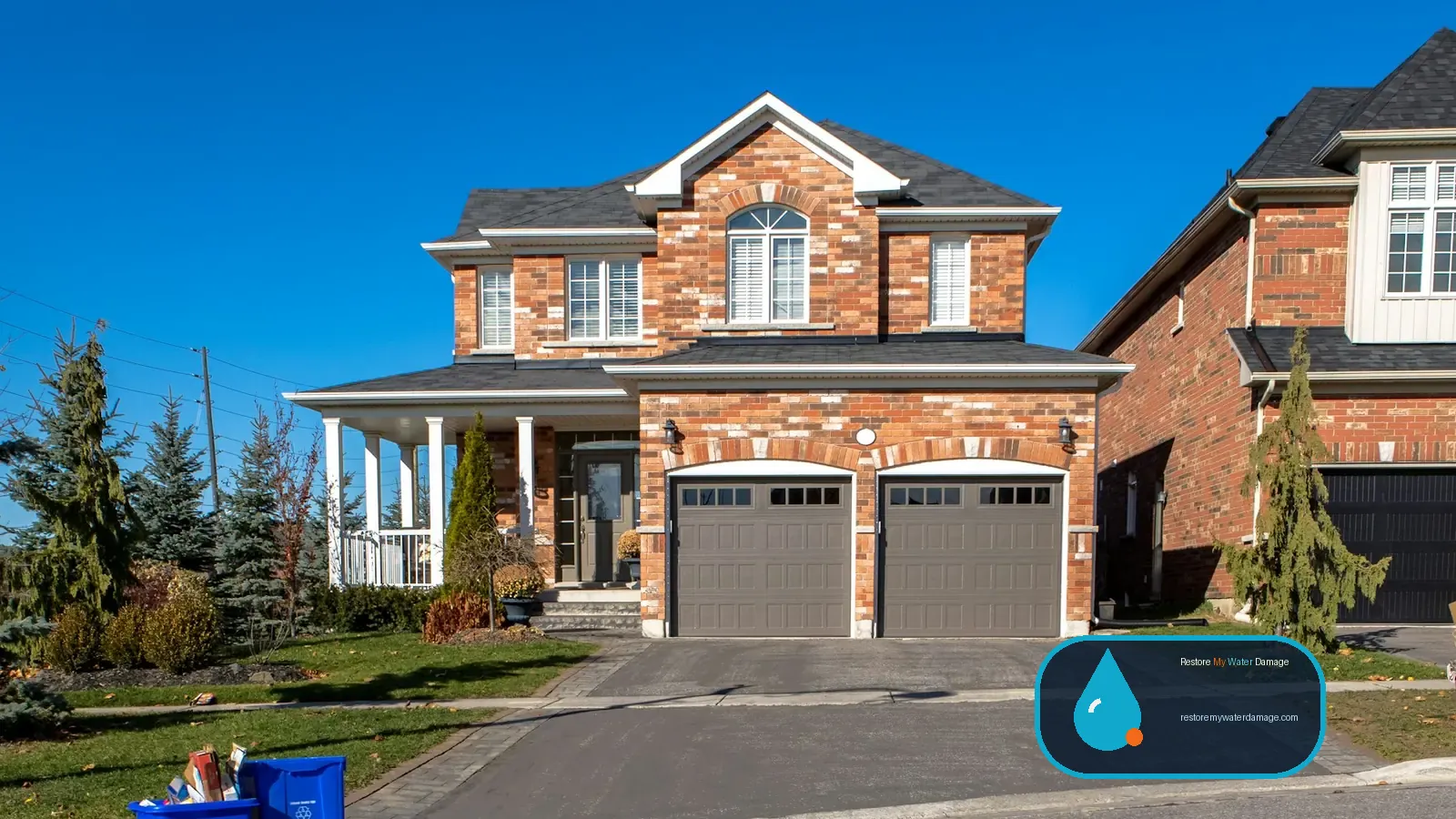
Vancouver and the rest of Clark County share the Portland metro area's long, wet season, but the property picture here is different. The county has grown quickly, so there are many newer subdivisions, alongside older neighborhoods in central Vancouver and rural acreage with wells and septic systems to the north and east. Camas and Washougal also sit close to the Columbia River Gorge, which brings strong east winds and winter ice storms.
Restore My Water Damage connects property owners across Vancouver and Southwest Washington with water damage restoration. Services include water extraction, crawlspace and structural drying, sewage and floodwater cleanup, and documentation for insurance. If you have an active leak, shut off the water and call (833) 435-4276.
In the Pacific Northwest, the most expensive water damage is often the kind that stays hidden. A sump pump fails in a crawlspace, rain seeps behind siding, or a drain line leaks under the floor, and it can go on for weeks. Early detection with moisture meters and thermal imaging keeps repairs smaller. See basement water damage restoration and mold and water damage.
Whatever the cause, stopping the source and documenting damage early helps both the repair and the insurance claim.

Water Damage Restoration Services in Vancouver
Water damage restoration in Vancouver / Southwest Washington covers the full sequence from the first call to the final repair: stopping the damage, removing water, drying the structure to measurable dry standards, cleaning affected materials and rebuilding what cannot be saved. Every job is different, so the scope is set after an on-site inspection, not over the phone.
Emergency Water Damage Cleanup
The first hours matter most. Standing water spreads into drywall, subfloors and cabinets, and wet materials can support mold growth within roughly 24–48 hours. Emergency work focuses on safety checks, stopping further damage and getting extraction started. Learn more about emergency water damage restoration.
Water Extraction and Structural Drying
Extraction removes liquid water far faster than evaporation ever could. Drying then uses air movers and dehumidifiers placed according to moisture readings, with daily monitoring until materials reach their dry goals. See water extraction and structural drying.
Water Damage Repair and Restoration
Once the structure is dry, damaged drywall, baseboards, flooring, cabinets and paint are repaired or replaced. Some property owners use one company for both mitigation and rebuild; others hire a separate contractor. Read about water damage repair and restoration.
Fire and Water Damage Restoration
After a fire, water from sprinklers and hoses often causes as much damage as the flames. Drying and soot cleanup must be coordinated so moisture does not set smoke residue deeper into materials. See fire and water damage restoration.
Mold-Related Water Damage
When water has been present long enough for mold to grow, the job follows containment and removal practices described in the IICRC S520 standard. Ask whether mold remediation is available for your address when you call. More on mold and water damage.
Common Causes of Water Damage in Vancouver
Across Washington, the most common drivers of water damage are prolonged rain, crawl-space moisture and winter freezes. The local factors specific to Vancouver / Southwest Washington are covered below.
Long Rainy Seasons and Saturated Soils
Southwest Washington usually gets most of its rain from fall through spring. When atmospheric rivers stall over the region, days of heavy rain saturate the ground. Clay-heavy soils in parts of Clark County drain slowly, so groundwater can rise into crawlspaces and against foundations. Downspouts that empty at the foundation, clogged yard drains and lots graded toward the house make it more likely that water ends up under the home.
Sump Pump and Crawlspace Drain Failures
Many homes in Clark County's newer subdivisions and in low-lying areas rely on crawlspace drains, perimeter drains and sump pumps to keep water out. A sump pump that burns out, loses power during a storm, has a stuck float switch or a frozen discharge line can let a crawlspace flood quickly during heavy rain. A battery backup and regular testing before the wet season are simple protective steps. See our prevention guide.
East Wind and Ice in Camas and Washougal
Communities at the western end of the Columbia River Gorge, like Camas and Washougal, get strong east winds and freezing rain during winter cold outbreaks. Ice can bring down trees and power lines, which leads to roof punctures and power outages that stop sump pumps. Prolonged freezes can crack pipes in crawlspaces, garages and exterior walls. See burst pipe water damage cleanup.
Rivers, Creeks and Low-Lying Areas
Clark County is bordered by the Columbia River and crossed by the East Fork Lewis River, Salmon Creek, Burnt Bridge Creek and other waterways. The East Fork Lewis River near La Center and parts of the Lewis River basin have seen significant flooding during major storms. Properties in floodplains and low areas near creeks should be prepared for high water in winter. See flood damage restoration.
Rural Wells and Septic Systems
North and east Clark County, including areas around Battle Ground, Yacolt, Amboy and Brush Prairie, include many acreage properties with private wells and septic systems. Well pressure tank failures, frozen well lines and septic backups during saturated winter conditions are problems that suburban homes don't usually face. Septic backups are Category 3 water and need contaminated-water cleanup protocols.
Gutters, Fir Needles and Roof Leaks
Clark County's Douglas firs, cedars and big leaf maples drop needles, cones and leaves into gutters and roof valleys throughout the year. Clogged gutters overflow during heavy rain, sending water behind fascia boards, against siding and directly beside foundations. Moss thrives on shaded roofs in the damp climate, lifting shingles and holding water. Roof leaks often show up first as attic stains or ceiling spots after extended storms. Regular gutter cleaning and moss treatment are some of the most effective ways to protect homes here.
Plumbing Failures in Newer and Older Homes
Everyday plumbing failures cause a large share of water damage. In newer homes, loose PEX fittings, ice maker lines, dishwasher connections and washing machine hoses are common leak sources. In older Vancouver homes, galvanized supply pipes corrode from the inside, and cast iron or clay sewer lines can crack or fill with roots, leading to backups. Water heaters in garages and closets eventually rust through. Leaks under floors in crawlspace homes can drip unseen for weeks. See burst pipe water damage cleanup.
Burst or Frozen Pipes
Cold snaps can freeze water in exterior walls, crawl spaces, garages and attics. Ice expands, the pipe splits, and the leak often appears only after thawing. Keep the main shutoff location known, insulate vulnerable runs and let a trickle run from exposed faucets during hard freezes.
Appliance and Plumbing Leaks
Water heaters, dishwashers, ice-maker lines, washing machines and toilet supply lines fail in every market. These are usually Category 1 (clean) water at first, but water that sits or contacts flooring and debris can degrade to Category 2 or 3.
Basement Seepage and Sump Pump Failure
Where basements are common, heavy rain raises groundwater pressure against foundation walls. A failed sump pump or power outage during a storm can put inches of water on the floor within hours.
Sewer or Drain Backups
Tree roots, grease, collapsed lines and heavy rain overwhelming municipal systems can push sewage back into a property. This is Category 3 water and requires protective equipment and removal of affected porous materials. See sewage backup cleanup.
Types of Water Damage We Handle
Restoration professionals classify water by contamination level using the IICRC S500 categories, because the category decides what can be dried in place and what must be removed.
| Category | Typical sources | What it means for restoration |
|---|---|---|
| Clean water (Category 1) | Broken supply lines, faucet overflows, fresh rain intrusion | Most materials can often be dried in place if work starts quickly |
| Gray water (Category 2) | Washing machine or dishwasher discharge, toilet overflow without feces | Carpet pad and some porous materials usually removed; cleaning and antimicrobial treatment |
| Black water (Category 3) | Sewage, rising floodwater, water standing long enough to grow bacteria | Porous materials generally removed; PPE and containment required |
For a deeper explanation, read water damage categories explained.
The Water Damage Restoration Process
A professional restoration job in Vancouver follows the same measurable sequence used nationally. The details of each step change with the size of the loss and the materials involved.
1. Emergency Assessment
The technician confirms the water source is stopped, checks electrical and structural hazards, identifies the water category and drying class, and photographs conditions before work begins.
2. Water Removal / Extraction
Truck-mounted or portable extractors remove standing water from floors, carpet and pad. Thorough extraction can shorten drying time by days.
3. Moisture Detection
Pin and pinless moisture meters, thermo-hygrometers and thermal cameras map where water has traveled, including inside walls and under flooring.
4. Drying and Dehumidification
Air movers increase evaporation while dehumidifiers pull that moisture out of the air. Readings are logged daily until materials reach dry standards.
5. Cleaning and Sanitizing
Affected surfaces are cleaned, and antimicrobial products are applied where the category warrants. Unsalvageable materials are removed and documented.
6. Repairs and Reconstruction
Drywall, insulation, trim, flooring and paint are restored. The full restoration process guide explains each step in detail.
How Long Does Water Damage Restoration Take?
Drying a typical water-damaged room commonly takes about three to five days once equipment is in place, though dense materials such as hardwood and plaster can take longer. Repairs add days to weeks depending on scope, material availability and insurance approvals.
Timelines depend on how quickly work begins, the amount of water, the materials that got wet, the water category, and indoor humidity. Drying should end when moisture readings say the materials are dry, not on a fixed calendar date. See how long water damage restoration takes.
How Much Does Water Damage Restoration Cost?
There is no single price for water damage restoration in Vancouver. Cost depends on the affected square footage, water category, materials, how long the water sat, equipment days, and whether repairs are included. A written estimate should follow an inspection.
- Size of the affected area and how many rooms or floors are involved
- Water category — sewage and floodwater require more removal and protective work
- Materials — hardwood, plaster and cabinetry take longer and cost more to dry or replace
- Drying time and the amount of equipment needed
- Repairs and rebuild, which are often priced separately from mitigation
Commonly reported national figures are explained in our water damage restoration cost guide.
Does Insurance Cover Water Damage Restoration?
Many homeowners policies cover sudden and accidental water damage, such as a burst pipe, but commonly exclude gradual leaks, poor maintenance and flooding from outside. Flood damage generally requires a separate flood policy. Always read your own policy and confirm with your insurer or adjuster.
Document the damage with photos and video before cleanup, keep receipts, and take reasonable steps to prevent further damage. Restore My Water Damage can provide moisture logs, photos and itemized scope documentation for your claim. Read water damage insurance claims for a step-by-step walkthrough.
Residential vs. Commercial Water Damage Restoration
Southwest Washington's property mix has shifted quickly with population growth.
Newer subdivisions: Much of the housing in east Vancouver, Camas, Ridgefield and Battle Ground was built from the 1990s onward. These homes often have crawlspaces with drainage systems, PEX or CPVC plumbing, engineered wood subfloors and vinyl or laminate flooring. Engineered materials can be sensitive to prolonged moisture, so prompt drying matters.
Older Vancouver neighborhoods: Areas near downtown and central Vancouver include early and mid-20th century homes with basements or older crawlspaces, aging sewer laterals and older plumbing.
Rural and acreage properties: Homes on larger lots may include barns, shops, wells and septic systems. Restoration may need to be coordinated with well and septic contractors.
Multifamily and commercial: Vancouver's growing waterfront, downtown and I-5 and I-205 corridors include new apartments, mixed-use buildings, offices, warehouses and retail. See commercial water damage restoration.
Because Southwest Washington residents often live or work on both sides of the Columbia, it helps to know that insurance, licensing and permitting rules differ between Washington and Oregon. Confirm that any contractor is properly registered in Washington for work on Washington properties.
In every case, drying plans should be matched to the structure and the cool, damp climate.
Homes and commercial properties follow the same drying science, but commercial jobs add tenant coordination, business continuity planning and larger equipment deployments. See residential and commercial water damage restoration.

Why Choose a Professional Water Damage Restoration Company
Professional restoration is about measurement and documentation. Household fans and shop vacuums can move surface water, but they cannot confirm that wall cavities and subfloors are dry. Hidden moisture is what leads to mold, warped floors and repeat repairs.
- Ask whether technicians are trained to the IICRC S500 standard and request proof
- Expect written moisture readings and a drying log
- Get a written work authorization and scope before large removals
- Confirm insurance coverage and applicable state or local contractor licensing
Use our guide to choosing a restoration company to compare providers.
Areas and ZIP Codes We Serve
This market covers Vancouver and Clark County in Southwest Washington, including Camas, Washougal, Battle Ground, Ridgefield, La Center, Yacolt and unincorporated areas such as Hazel Dell, Orchards, Salmon Creek and Brush Prairie, across the Columbia River from Portland. This page covers 31 ZIP codes across 20 communities, including Amboy, Ariel, Battle Ground, Bingen, Brush Prairie, Carrolls, Cougar, Heisson, Kalama, Kelso, La Center, Longview….
98601Amboy98603Ariel98604Battle Ground98605Bingen98606Brush Prairie98609Carrolls98616Cougar98622Heisson98625Kalama98626Kelso98629La Center98632Longview98642Ridgefield98648Stevenson98649Toutle98651Underwood98660Vancouver98661Vancouver98662Vancouver98663Vancouver98664Vancouver98665Vancouver98671Washougal98674Woodland98675Yacolt98682Vancouver98683Vancouver98684Vancouver98685Vancouver98686Vancouver98687Vancouver
Nearby Washington markets: TCTri-Cities / Kennewick-Pasco-Richland. See all  Washington service areas.
What to Do Before Help Arrives
- Test your sump pump before the rainy season by pouring water into the pit, and consider a battery backup for storm power outages.
- If the power goes out during heavy rain, check the crawlspace for rising water once it is safe to do so.
- In Camas, Washougal and other east wind areas, insulate crawlspace and garage pipes and cover foundation vents before hard freezes.
- If you have a well, know where the pump breaker is, and turn it off if a leak is between the well and the house.
- If a septic backup occurs, stop using water and keep everyone away from the affected area.
- Keep gutters and downspouts clear of fir needles and leaves, and route downspouts away from the foundation.
- Stay away from flooded creeks and roads during winter storms.
- Photograph damage and any failed equipment such as sump pumps or water heaters before cleanup.
More detail: what to do after a water leak.
Frequently Asked Questions
My crawlspace flooded when the power went out. What happened?
Many Clark County homes rely on a sump pump to remove groundwater from the crawlspace. When a storm knocks out power, the pump stops while rain continues, and water can rise quickly. A battery backup or water-powered backup pump, plus a high-water alarm, can protect against this.
How long does it take to dry a wet crawlspace?
Drying time depends on how much water there was, how long it sat, and what materials got wet. After standing water is removed and wet insulation and vapor barrier are taken out, drying joists and subfloor usually takes several days with dehumidifiers and air movers. Moisture readings determine when it is actually done.
Do you handle rural properties with wells and septic systems?
Yes. Restore My Water Damage can help connect rural Southwest Washington owners with restoration. The water source must be controlled first, which may involve turning off the well pump or having a septic contractor inspect the system. Restoration then follows clean or contaminated water protocols depending on the source.
Are frozen pipes a real risk in Vancouver?
Freezes are less frequent than in colder climates, but they happen, especially during east wind events near the Gorge. Pipes in vented crawlspaces, garages and exterior walls are most vulnerable. Insulation, covering vents and dripping faucets during hard freezes help prevent bursts.
Does Washington homeowners insurance cover crawlspace flooding?
It depends on the cause and the policy. Sudden plumbing failures are often covered, while groundwater seepage and flooding are commonly excluded. Some policies offer endorsements for sump pump failure or water backup. Review your policy and speak with your agent.
How much does water damage restoration cost in Vancouver, WA?
Costs vary with square footage, water type and materials that need removal. As typical national ranges, small clean-water drying jobs often run $1,000 to $5,000, while crawlspace flooding, multi-room damage or flooring and drywall replacement can reach $10,000 or more. Independent providers serving Vancouver and Southwest Washington set their own pricing after an inspection of the property.
Why does mold grow so quickly after water damage in the Pacific Northwest?
Long, damp, cool seasons keep indoor and outdoor humidity high for much of the year in Southwest Washington, so wet materials evaporate slowly. Mold can begin growing within 24 to 48 hours on drywall, wood, carpet and insulation. Opening windows often adds moisture rather than removing it, which is why dehumidifiers and air movers are key to drying. Call (833) 435-4276 24/7 and we'll connect you with local help.
What should I do if heavy rain leaks into my Vancouver home?
Catch drips, move belongings and check the attic, windows and exterior doors for the entry point. Clogged gutters and downspouts are common culprits during the rainy season. Photograph damage, tarp roof openings when safe, and dry wet areas quickly. Soaked insulation and ceiling drywall should be evaluated for removal to keep moisture from spreading into framing. Call (833) 435-4276 24/7 and we'll connect you with local help.
Does Washington homeowners insurance cover water damage from a roof leak?
Coverage usually depends on the cause. Sudden damage, such as a windstorm tearing off shingles or a fallen tree puncturing the roof, is often covered along with interior water damage. Leaks from worn roofing, missing maintenance or long-term moss buildup common in the Northwest are frequently excluded. Document the damage, make temporary repairs, and review your policy terms.
Can a wet crawlspace damage the floors in my Southwest Washington home?
Yes. Standing water or high humidity in a crawlspace can warp hardwood, weaken subfloors, rust ductwork and encourage mold on joists and insulation. Musty odors and soft or cupped floors are common signs. Drying the crawlspace, fixing drainage, replacing damaged insulation and installing a proper vapor barrier help protect the floor system from repeat damage. Call (833) 435-4276 24/7 and we'll connect you with local help.
Request Water Damage Restoration Help in Vancouver
Call (833) 435-4276 or send a request with your ZIP code and a short description of the damage. We will explain the next steps and we will connect you with help for your address.