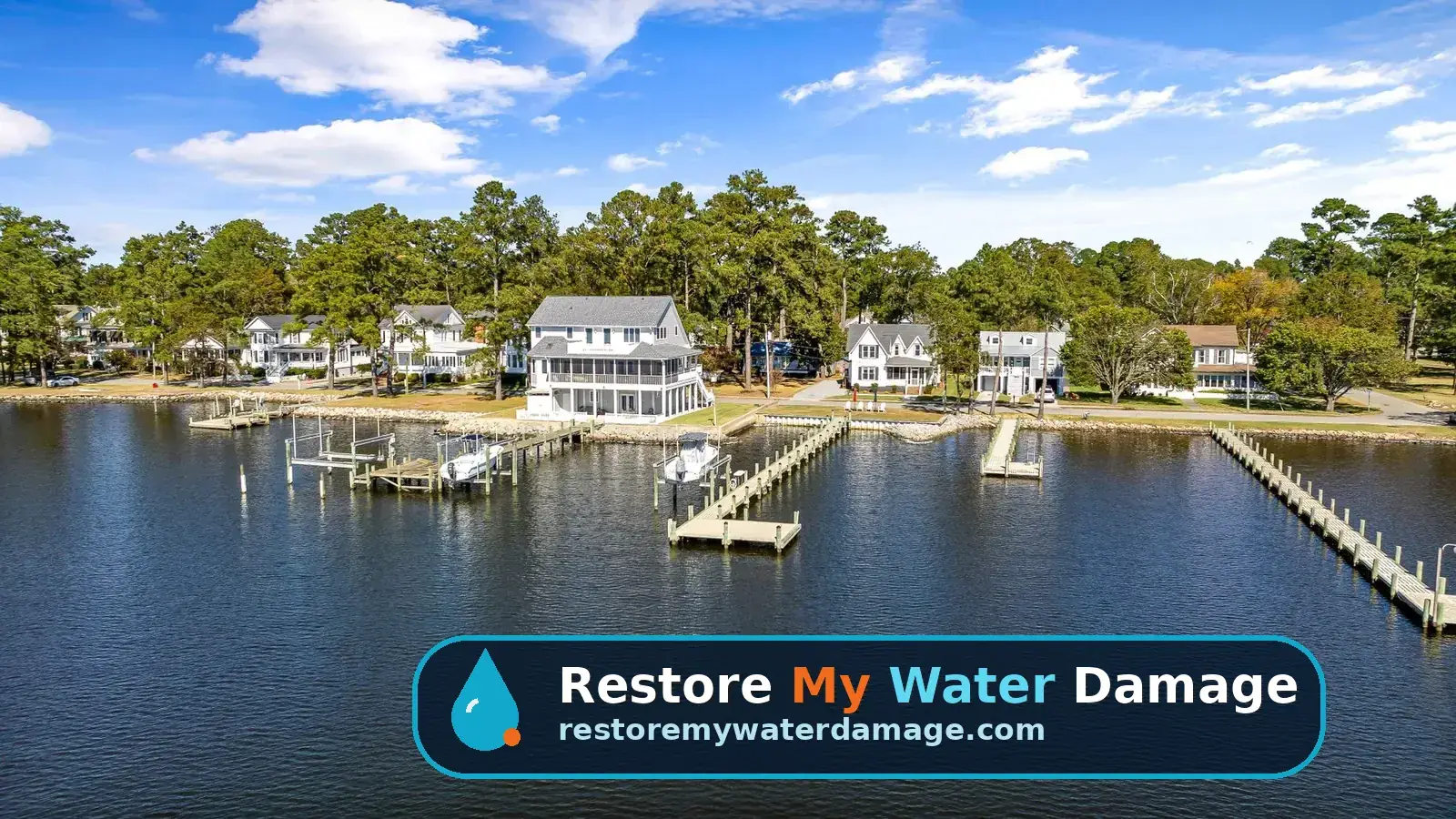
The Atlantic City area combines a dense barrier island city with neighboring shore towns and a large mainland county. Absecon Island holds Atlantic City, Ventnor, Margate and Longport, while Brigantine sits on its own island to the north. On the mainland, Egg Harbor Township, Galloway, Absecon, Pleasantville, Somers Point and Hammonton range from suburban neighborhoods to pinelands and farmland.
Restore My Water Damage connects property owners, condo associations and businesses in Atlantic County with water damage restoration help: water extraction, moisture mapping, structural drying, removal of damaged materials, and cleanup after saltwater flooding or sewage.
This market's distinct angle is its mix of high-rise and hospitality buildings with low-lying island neighborhoods that flood from the back bays. Casino hotels, condominium towers and multi-story apartment buildings face water damage that can move through many floors, while homes in Atlantic City's bayside neighborhoods, Ventnor, Margate and Brigantine deal with tidal and storm flooding that comes from the bay side rather than the ocean. This page covers those causes, what the property mix means for restoration, and what to do before help arrives. For urgent help, call (833) 435-4276 or see commercial water damage restoration.
Water Damage Restoration Services in Atlantic City Area
Water damage restoration in Atlantic City Area / Atlantic County covers the full sequence from the first call to the final repair: stopping the damage, removing water, drying the structure to measurable dry standards, cleaning affected materials and rebuilding what cannot be saved. Every job is different, so the scope is set after an on-site inspection, not over the phone.
Emergency Water Damage Cleanup
The first hours matter most. Standing water spreads into drywall, subfloors and cabinets, and wet materials can support mold growth within roughly 24–48 hours. Emergency work focuses on safety checks, stopping further damage and getting extraction started. Learn more about emergency water damage restoration.
Water Extraction and Structural Drying
Extraction removes liquid water far faster than evaporation ever could. Drying then uses air movers and dehumidifiers placed according to moisture readings, with daily monitoring until materials reach their dry goals. See water extraction and structural drying.
Water Damage Repair and Restoration
Once the structure is dry, damaged drywall, baseboards, flooring, cabinets and paint are repaired or replaced. Some property owners use one company for both mitigation and rebuild; others hire a separate contractor. Read about water damage repair and restoration.
Fire and Water Damage Restoration
After a fire, water from sprinklers and hoses often causes as much damage as the flames. Drying and soot cleanup must be coordinated so moisture does not set smoke residue deeper into materials. See fire and water damage restoration.
Mold-Related Water Damage
When water has been present long enough for mold to grow, the job follows containment and removal practices described in the IICRC S520 standard. Ask whether mold remediation is available for your address when you call. More on mold and water damage.
Common Causes of Water Damage in Atlantic City Area
Across New Jersey, the most common drivers of water damage are frozen pipes, basement flooding, nor'easters and coastal or tropical storm flooding. The local factors specific to Atlantic City Area / Atlantic County are covered below.
Back-bay and tidal flooding on the islands
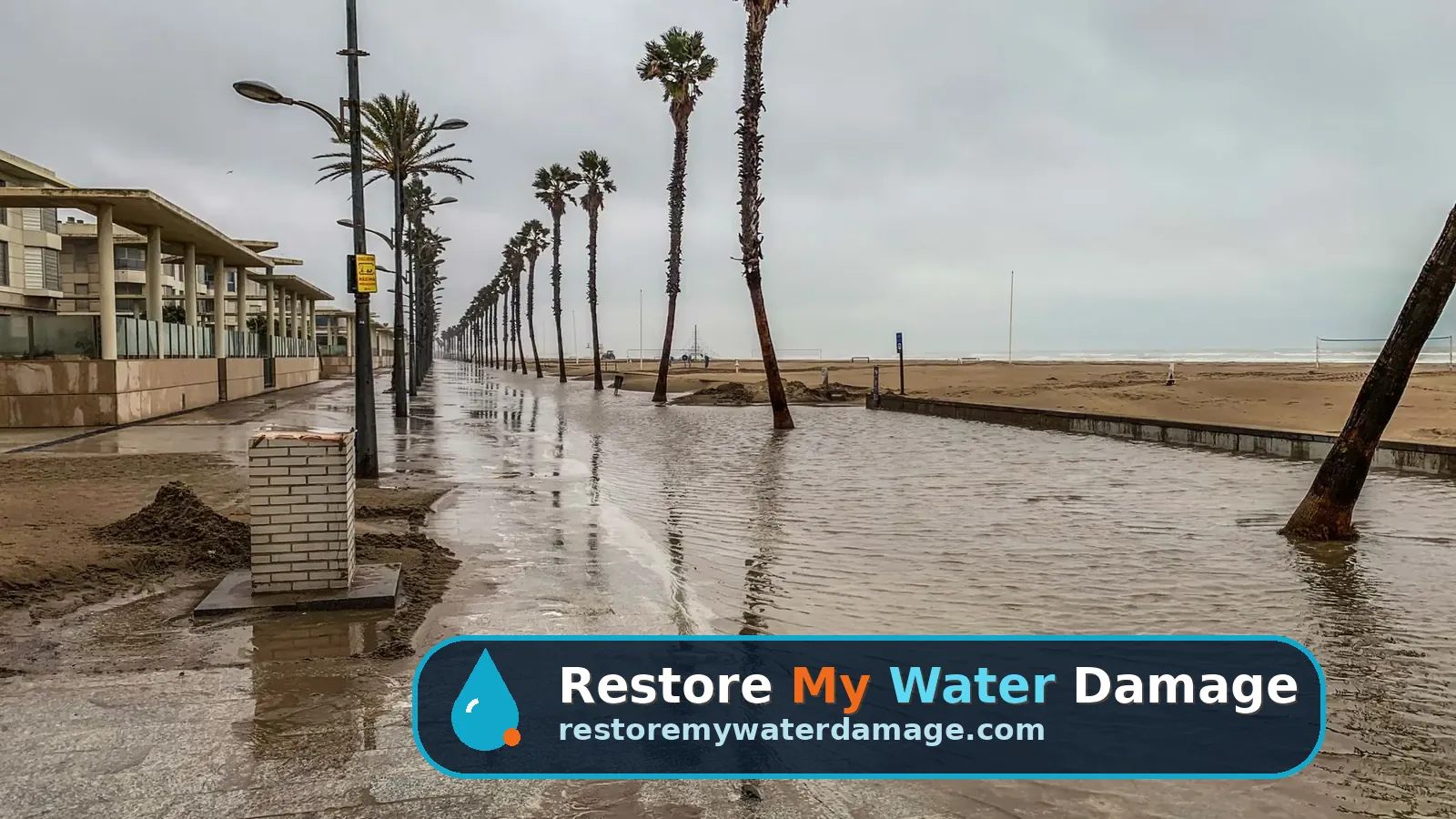
Much of Absecon Island and Brigantine is low-lying, and some of the most frequent flooding comes not from the ocean but from the back bays and thoroughfares. During nor'easters, strong onshore winds and higher-than-normal tides, bay water pushes up through storm drains and over bulkheads into streets, garages and ground floors. Neighborhoods on the bay side of Atlantic City, and in Ventnor, Margate and Brigantine, can see nuisance tidal flooding several times a year. Saltwater damages vehicles, HVAC equipment, electrical systems and building materials, and floodwater from streets is contaminated. See flood damage restoration.
Coastal storms and Superstorm Sandy
Superstorm Sandy in October 2012 brought significant flooding to Atlantic County's barrier islands, with bay-side neighborhoods in Atlantic City and nearby shore towns among the hardest hit by surge coming in from the back bays. Hurricanes, tropical storms and nor'easters continue to threaten the area with surge, wind-driven rain and roof damage. Many homes have since been elevated, but ground-level enclosures, garages and utilities remain exposed. See storm and rain water damage.
High-rise, condo and multi-story buildings
Atlantic City and parts of Ventnor and Brigantine have condominium towers and multi-story apartment buildings. In these buildings, a failed supply line, water heater, washing machine hose, HVAC condensate line or sprinkler head on an upper floor can send water through ceilings and walls into several units below. Wind-driven rain can enter through window and balcony door seals on exposed facades. Restoration requires coordinating access among multiple owners, the association and building management, and documenting damage in every affected unit.
Hotels, casinos and hospitality properties
Atlantic City's casino hotels, along with motels, restaurants, and entertainment venues across the county, operate extensive plumbing, sprinkler, kitchen and mechanical systems around the clock. Common water losses include guest room overflows, sprinkler discharges, kitchen and laundry plumbing failures, roof leaks and cooling system leaks. For hospitality businesses, the priority is containing damage, taking the fewest rooms and spaces out of service, and restoring operations quickly while ensuring proper drying.
Seasonal homes and mainland properties
Shore towns have many second homes left empty in winter, where frozen or failed pipes can run undetected for days. On the mainland, homes in Egg Harbor Township, Galloway and Hammonton include post-war and newer suburban construction, some with crawlspaces or basements affected by high groundwater, and rural properties on wells and septic. See burst pipe water damage cleanup.
Burst or Frozen Pipes
Cold snaps can freeze water in exterior walls, crawl spaces, garages and attics. Ice expands, the pipe splits, and the leak often appears only after thawing. Keep the main shutoff location known, insulate vulnerable runs and let a trickle run from exposed faucets during hard freezes.
Appliance and Plumbing Leaks
Water heaters, dishwashers, ice-maker lines, washing machines and toilet supply lines fail in every market. These are usually Category 1 (clean) water at first, but water that sits or contacts flooring and debris can degrade to Category 2 or 3.
Basement Seepage and Sump Pump Failure
Where basements are common, heavy rain raises groundwater pressure against foundation walls. A failed sump pump or power outage during a storm can put inches of water on the floor within hours.
Sewer or Drain Backups
Tree roots, grease, collapsed lines and heavy rain overwhelming municipal systems can push sewage back into a property. This is Category 3 water and requires protective equipment and removal of affected porous materials. See sewage backup cleanup.
Types of Water Damage We Handle
Restoration professionals classify water by contamination level using the IICRC S500 categories, because the category decides what can be dried in place and what must be removed.
| Category | Typical sources | What it means for restoration |
|---|---|---|
| Clean water (Category 1) | Broken supply lines, faucet overflows, fresh rain intrusion | Most materials can often be dried in place if work starts quickly |
| Gray water (Category 2) | Washing machine or dishwasher discharge, toilet overflow without feces | Carpet pad and some porous materials usually removed; cleaning and antimicrobial treatment |
| Black water (Category 3) | Sewage, rising floodwater, water standing long enough to grow bacteria | Porous materials generally removed; PPE and containment required |
For a deeper explanation, read water damage categories explained.
The Water Damage Restoration Process
A professional restoration job in Atlantic City Area follows the same measurable sequence used nationally. The details of each step change with the size of the loss and the materials involved.
1. Emergency Assessment
The technician confirms the water source is stopped, checks electrical and structural hazards, identifies the water category and drying class, and photographs conditions before work begins.
2. Water Removal / Extraction
Truck-mounted or portable extractors remove standing water from floors, carpet and pad. Thorough extraction can shorten drying time by days.
3. Moisture Detection
Pin and pinless moisture meters, thermo-hygrometers and thermal cameras map where water has traveled, including inside walls and under flooring.
4. Drying and Dehumidification
Air movers increase evaporation while dehumidifiers pull that moisture out of the air. Readings are logged daily until materials reach dry standards.
5. Cleaning and Sanitizing
Affected surfaces are cleaned, and antimicrobial products are applied where the category warrants. Unsalvageable materials are removed and documented.
6. Repairs and Reconstruction
Drywall, insulation, trim, flooring and paint are restored. The full restoration process guide explains each step in detail.
How Long Does Water Damage Restoration Take?
Drying a typical water-damaged room commonly takes about three to five days once equipment is in place, though dense materials such as hardwood and plaster can take longer. Repairs add days to weeks depending on scope, material availability and insurance approvals.
Timelines depend on how quickly work begins, the amount of water, the materials that got wet, the water category, and indoor humidity. Drying should end when moisture readings say the materials are dry, not on a fixed calendar date. See how long water damage restoration takes.
How Much Does Water Damage Restoration Cost?
There is no single price for water damage restoration in Atlantic City Area. Cost depends on the affected square footage, water category, materials, how long the water sat, equipment days, and whether repairs are included. A written estimate should follow an inspection.
- Size of the affected area and how many rooms or floors are involved
- Water category — sewage and floodwater require more removal and protective work
- Materials — hardwood, plaster and cabinetry take longer and cost more to dry or replace
- Drying time and the amount of equipment needed
- Repairs and rebuild, which are often priced separately from mitigation
Commonly reported national figures are explained in our water damage restoration cost guide.
Does Insurance Cover Water Damage Restoration?
Many homeowners policies cover sudden and accidental water damage, such as a burst pipe, but commonly exclude gradual leaks, poor maintenance and flooding from outside. Flood damage generally requires a separate flood policy. Always read your own policy and confirm with your insurer or adjuster.
Document the damage with photos and video before cleanup, keep receipts, and take reasonable steps to prevent further damage. Restore My Water Damage can provide moisture logs, photos and itemized scope documentation for your claim. Read water damage insurance claims for a step-by-step walkthrough.
Residential vs. Commercial Water Damage Restoration
The residential mix in the Atlantic City area includes older single-family homes and duplexes in Atlantic City and Ventnor, elevated and newer luxury homes in Margate, Longport and Brigantine, condominium towers and multi-story apartment buildings, seasonal rentals and second homes, and suburban subdivisions and rural homes on the mainland. A significant share of island property is either seasonal or rental.
For restoration, island homes often face saltwater contamination, ground-level enclosures and elevated utilities that must be inspected after flooding. Seasonal homes may have had water running for an extended time before discovery, increasing the need for material removal and mold prevention. Condominium and high-rise losses involve multiple units and the association's master policy, and careful documentation of each unit is essential.
Commercial property is a major part of the county. It includes casino hotels and large hospitality properties, restaurants and retail along the boardwalk and in shore towns, marinas, healthcare facilities, an international airport and related aviation facilities in Egg Harbor Township, offices, schools and agricultural operations around Hammonton. Commercial restoration in hospitality settings emphasizes speed, containment, guest safety and phased work, while marinas and waterfront businesses must plan for recurring tidal and storm flooding. Clear records support property and business interruption claims.
Homes and commercial properties follow the same drying science, but commercial jobs add tenant coordination, business continuity planning and larger equipment deployments. See residential and commercial water damage restoration.
Why Choose a Professional Water Damage Restoration Company
Professional restoration is about measurement and documentation. Household fans and shop vacuums can move surface water, but they cannot confirm that wall cavities and subfloors are dry. Hidden moisture is what leads to mold, warped floors and repeat repairs.
- Ask whether technicians are trained to the IICRC S500 standard and request proof
- Expect written moisture readings and a drying log
- Get a written work authorization and scope before large removals
- Confirm insurance coverage and applicable state or local contractor licensing
Use our guide to choosing a restoration company to compare providers.
Areas and ZIP Codes We Serve
The Atlantic City area includes Absecon Island communities of Atlantic City, Ventnor, Margate and Longport, as well as Brigantine. Mainland Atlantic County includes Egg Harbor Township, Galloway, Absecon, Pleasantville, Somers Point and Hammonton. This page covers 35 ZIP codes across 34 communities, including Absecon, Buena, Cedarville, Cologne, Dividing Creek, Dorchester, Dorothy, Egg Harbor City, Egg Harbor Township, Elwood, Estell Manor, Fairton….
08037Hammonton08201Absecon08205Absecon08213Cologne08215Egg Harbor City08217Elwood08220Leeds Point08224New Gretna08231Oceanville08234Egg Harbor Township08240Pomona08241Port Republic08270Woodbine08310Buena08311Cedarville08315Dividing Creek08316Dorchester08317Dorothy08319Estell Manor08320Fairton08326Landisville08327Leesburg08328Malaga08329Mauricetown08330Mays Landing08340Milmay08341Minotola08342Mizpah08346Newtonville08347Norma08348Port Elizabeth08349Port Norris08350Richland08352Rosenhayn08353Shiloh
Nearby New Jersey markets: TMTrenton / Mercer County, NBNew Brunswick / Central Jersey, CHCherry Hill / Camden County, TRToms River / Ocean County, PMPrinceton / Mercer County, VSVineland / South Jersey. See all  New Jersey service areas.
What to Do Before Help Arrives
- Watch coastal flood advisories and tide forecasts, and move vehicles to higher ground during predicted high-tide flooding.
- Follow evacuation orders for the barrier islands during major storms and wait for the all-clear to return.
- Never drive through flooded island streets; saltwater ruins vehicles and hides hazards.
- Do not enter a flooded ground floor until electricity has been shut off or checked.
- In condo buildings, notify building management and neighbors below right away when a leak starts.
- Winterize seasonal homes and install leak and low-temperature alarms with phone alerts.
- Hospitality businesses should close off affected rooms and areas and shut off water to failed fixtures.
- Treat all floodwater as contaminated, and photograph damage before cleanup.
More detail: what to do after a water leak.
Frequently Asked Questions
Why does my street flood when it is not even raining?
Low-lying areas on Absecon Island and Brigantine can experience tidal flooding when high tides combine with onshore winds or nor'easters. Bay water backs up through storm drains and over bulkheads. This water is contaminated and salty, so any that enters garages or ground floors should be cleaned up promptly.
Water from an upper-floor condo damaged my unit. What should I do?
Notify building management and the unit owner above right away, photograph your damage and belongings, and contact your insurer. The association's master policy and bylaws typically define which areas it covers versus what individual owners cover. A restoration report documenting moisture and damage helps with claims.
Can you handle water damage in hotels and hospitality properties?
Commercial water damage restoration is available for hotels, restaurants, retail and entertainment venues. Work focuses on containing the damage, protecting guests and staff, drying affected rooms and common areas, and scheduling in phases so as much of the property as possible stays open.
Is saltwater flood damage different from a pipe leak?
Yes. Saltwater floodwater is contaminated and corrosive, so it damages electrical systems, HVAC, appliances and metal fasteners and typically requires removing saturated porous materials. A burst pipe is usually clean water. Insurance also differs: flooding generally requires flood coverage, while pipe leaks usually fall under homeowners policies.
How do I protect my shore home from winter water damage?
Either keep the heat at a safe minimum or fully winterize by shutting off and draining the water system. Insulate exposed pipes under elevated homes, install alarms that alert your phone to leaks or low temperatures, and have someone check the property after cold snaps and storms.
Do you serve mainland Atlantic County homes too?
Yes. Water damage restoration is available for homes in Egg Harbor Township, Galloway, Absecon, Pleasantville, Somers Point, Hammonton and surrounding areas. Common mainland issues include burst pipes, water heater failures, crawlspace moisture, sump pump failures and septic backups on rural properties.
How much does water damage restoration cost in the Atlantic City area?
Costs around Atlantic City and Atlantic County generally follow national ranges: small extractions often cost a few hundred to about $1,500, single-room losses with drywall or flooring removal commonly run $2,500 to $6,000, and major flood or saltwater losses can go well above $10,000. Independent providers set pricing based on size, water type and materials, so ask for a written estimate. Call (833) 435-4276 24/7 and we'll connect you with local help.
Does New Jersey homeowners insurance cover flood damage at the shore?
Standard homeowners policies in New Jersey exclude flood damage from storm surge, tidal flooding and rising water, which is common in shore communities. That coverage comes from a separate flood policy through the NFIP or a private insurer, usually with a waiting period. Sudden internal water damage, like a burst pipe or failed water heater, is typically covered under homeowners or condo policies.
How do I dry out a vacation rental in Atlantic County after water damage?
Stop the water source, document damage with photos, and notify guests and your insurer. Remove wet rugs and linens, and start professional extraction and drying quickly, since mold can begin within 24 to 48 hours in humid shore air. Ask the provider for moisture readings and a drying log, which help with insurance claims and any lost rental income coverage your policy might include. Call (833) 435-4276 24/7 and we'll connect you with local help.
What should I do after nor'easter flooding in an Atlantic City area home?
Wait until it is safe, avoid standing water near electrical outlets, and turn off power to flooded areas if possible. Photograph all damage before cleanup. Treat floodwater as contaminated: wear boots, gloves and a mask, and discard soaked porous items like carpet pad and insulation. Contact your flood insurer promptly and start professional drying to limit mold and structural damage. Call (833) 435-4276 24/7 and we'll connect you with local help.
Request Water Damage Restoration Help in Atlantic City Area
Call (833) 435-4276 or send a request with your ZIP code and a short description of the damage. We will explain the next steps and we will connect you with help for your address.