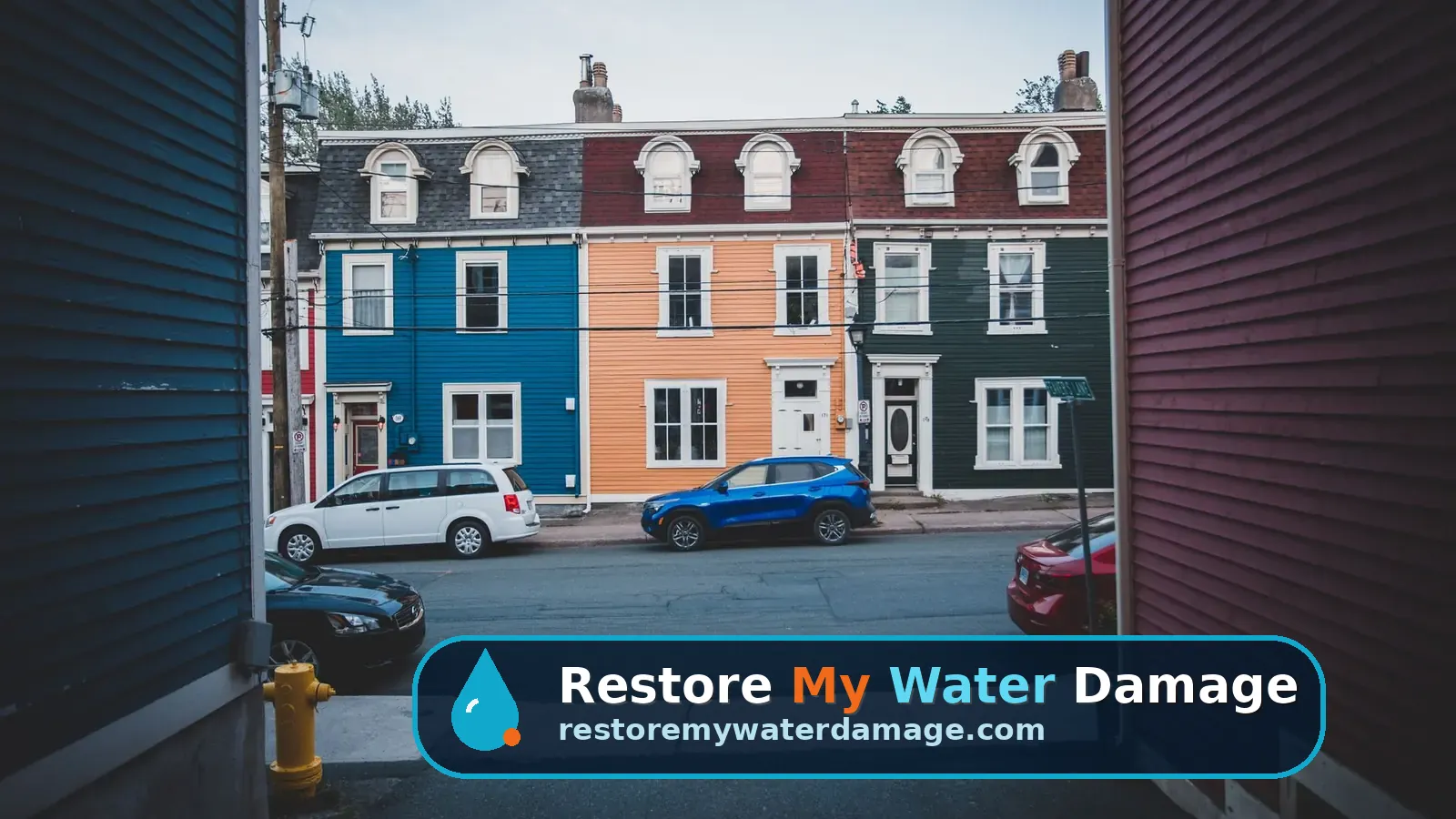
Trenton, New Jersey's capital, sits on the Delaware River at the western edge of Mercer County. It is an older, dense city with neighborhoods of brick row homes and twins, many built during its industrial peak in the late nineteenth and early twentieth centuries, alongside a downtown of state government offices and commercial buildings. Neighboring Hamilton Township, Ewing and Lawrence add large areas of post-war suburban housing, apartments and office and industrial property.
Restore My Water Damage connects Trenton-area homeowners, landlords and businesses with water damage restoration help: water extraction, moisture mapping, structural drying, removal of damaged materials, and cleanup after sewage or floodwater. In a city with so much older attached housing, the job often begins with figuring out where the water came from and where it traveled, including through shared walls and into neighboring units.
The Trenton area faces a combination of aging urban infrastructure, river and creek flooding, and winter freezes. This page covers the causes of water damage most common in the city and its close-in suburbs, what the property mix means for restoration, and practical steps to take before help arrives. For urgent help, call (833) 435-4276 or visit emergency water damage restoration.
Water Damage Restoration Services in Trenton
Water damage restoration in Trenton / Mercer County covers the full sequence from the first call to the final repair: stopping the damage, removing water, drying the structure to measurable dry standards, cleaning affected materials and rebuilding what cannot be saved. Every job is different, so the scope is set after an on-site inspection, not over the phone.
Emergency Water Damage Cleanup
The first hours matter most. Standing water spreads into drywall, subfloors and cabinets, and wet materials can support mold growth within roughly 24–48 hours. Emergency work focuses on safety checks, stopping further damage and getting extraction started. Learn more about emergency water damage restoration.
Water Extraction and Structural Drying
Extraction removes liquid water far faster than evaporation ever could. Drying then uses air movers and dehumidifiers placed according to moisture readings, with daily monitoring until materials reach their dry goals. See water extraction and structural drying.
Water Damage Repair and Restoration
Once the structure is dry, damaged drywall, baseboards, flooring, cabinets and paint are repaired or replaced. Some property owners use one company for both mitigation and rebuild; others hire a separate contractor. Read about water damage repair and restoration.
Fire and Water Damage Restoration
After a fire, water from sprinklers and hoses often causes as much damage as the flames. Drying and soot cleanup must be coordinated so moisture does not set smoke residue deeper into materials. See fire and water damage restoration.
Mold-Related Water Damage
When water has been present long enough for mold to grow, the job follows containment and removal practices described in the IICRC S520 standard. Ask whether mold remediation is available for your address when you call. More on mold and water damage.
Common Causes of Water Damage in Trenton
Across New Jersey, the most common drivers of water damage are frozen pipes, basement flooding, nor'easters and coastal or tropical storm flooding. The local factors specific to Trenton / Mercer County are covered below.
Aging row homes and urban plumbing
Trenton's neighborhoods are filled with row homes and twins built a century or more ago. Many still have sections of galvanized supply pipe, cast-iron drain stacks, older sewer laterals and stone or brick basements. Galvanized lines corrode from within and fail at joints, and cast-iron stacks crack or rust through, sending wastewater into walls and basements. Attached construction means leaks can migrate next door before anyone notices. A large share of the city's housing is rental, and vacant or poorly maintained units are especially prone to undetected leaks and frozen pipes.
Sewer backups and heavy rain
Parts of Trenton are served by older sewer infrastructure, including combined sewers where stormwater and wastewater share pipes. Heavy rain can overwhelm these systems and push water back through basement floor drains and low fixtures. Cracked or root-clogged laterals from individual homes also cause backups. Sewage and backflow water is contaminated and requires protective equipment, removal of porous materials, cleaning and disinfection. See sewage backup cleanup.
Delaware River and Assunpink Creek flooding
Trenton's riverfront has flooded repeatedly over its history. The Delaware River floods of September 2004, April 2005 and June 2006 affected low-lying Trenton neighborhoods, including the Island section along the river. The Assunpink Creek, which flows through the city to the Delaware, can also rise during heavy rain. The remnants of Ida in September 2021 brought intense rainfall and flooding to Mercer County as well. Floodwater carries sediment and contaminants, so flood losses usually involve removal of saturated materials before drying. See flood damage restoration.
Freezing weather and vacant properties
Trenton winters include regular cold snaps that freeze pipes along exterior walls, in rear additions and in basements with broken or poorly sealed windows. Vacant homes and units between tenants are particularly vulnerable if the heat is off. Many burst pipes are discovered only when the water turns back on or temperatures rise. See burst pipe water damage cleanup.
Government, office and older commercial buildings
Downtown Trenton includes state government buildings, offices, courts and older commercial buildings, many with flat roofs, aging roof drains, basement mechanical rooms and fire sprinkler systems. Clogged roof drains during heavy rain, sprinkler line failures and plumbing leaks on upper floors can affect multiple floors of office space, records storage and electrical equipment. See commercial water damage restoration.
Burst or Frozen Pipes
Cold snaps can freeze water in exterior walls, crawl spaces, garages and attics. Ice expands, the pipe splits, and the leak often appears only after thawing. Keep the main shutoff location known, insulate vulnerable runs and let a trickle run from exposed faucets during hard freezes.
Appliance and Plumbing Leaks
Water heaters, dishwashers, ice-maker lines, washing machines and toilet supply lines fail in every market. These are usually Category 1 (clean) water at first, but water that sits or contacts flooring and debris can degrade to Category 2 or 3.
Basement Seepage and Sump Pump Failure
Where basements are common, heavy rain raises groundwater pressure against foundation walls. A failed sump pump or power outage during a storm can put inches of water on the floor within hours.
Sewer or Drain Backups
Tree roots, grease, collapsed lines and heavy rain overwhelming municipal systems can push sewage back into a property. This is Category 3 water and requires protective equipment and removal of affected porous materials. See sewage backup cleanup.
Types of Water Damage We Handle
Restoration professionals classify water by contamination level using the IICRC S500 categories, because the category decides what can be dried in place and what must be removed.
| Category | Typical sources | What it means for restoration |
|---|---|---|
| Clean water (Category 1) | Broken supply lines, faucet overflows, fresh rain intrusion | Most materials can often be dried in place if work starts quickly |
| Gray water (Category 2) | Washing machine or dishwasher discharge, toilet overflow without feces | Carpet pad and some porous materials usually removed; cleaning and antimicrobial treatment |
| Black water (Category 3) | Sewage, rising floodwater, water standing long enough to grow bacteria | Porous materials generally removed; PPE and containment required |
For a deeper explanation, read water damage categories explained.
The Water Damage Restoration Process
A professional restoration job in Trenton follows the same measurable sequence used nationally. The details of each step change with the size of the loss and the materials involved.
1. Emergency Assessment
The technician confirms the water source is stopped, checks electrical and structural hazards, identifies the water category and drying class, and photographs conditions before work begins.
2. Water Removal / Extraction
Truck-mounted or portable extractors remove standing water from floors, carpet and pad. Thorough extraction can shorten drying time by days.
3. Moisture Detection
Pin and pinless moisture meters, thermo-hygrometers and thermal cameras map where water has traveled, including inside walls and under flooring.
4. Drying and Dehumidification
Air movers increase evaporation while dehumidifiers pull that moisture out of the air. Readings are logged daily until materials reach dry standards.
5. Cleaning and Sanitizing
Affected surfaces are cleaned, and antimicrobial products are applied where the category warrants. Unsalvageable materials are removed and documented.
6. Repairs and Reconstruction
Drywall, insulation, trim, flooring and paint are restored. The full restoration process guide explains each step in detail.
How Long Does Water Damage Restoration Take?
Drying a typical water-damaged room commonly takes about three to five days once equipment is in place, though dense materials such as hardwood and plaster can take longer. Repairs add days to weeks depending on scope, material availability and insurance approvals.
Timelines depend on how quickly work begins, the amount of water, the materials that got wet, the water category, and indoor humidity. Drying should end when moisture readings say the materials are dry, not on a fixed calendar date. See how long water damage restoration takes.
How Much Does Water Damage Restoration Cost?
There is no single price for water damage restoration in Trenton. Cost depends on the affected square footage, water category, materials, how long the water sat, equipment days, and whether repairs are included. A written estimate should follow an inspection.
- Size of the affected area and how many rooms or floors are involved
- Water category — sewage and floodwater require more removal and protective work
- Materials — hardwood, plaster and cabinetry take longer and cost more to dry or replace
- Drying time and the amount of equipment needed
- Repairs and rebuild, which are often priced separately from mitigation
Commonly reported national figures are explained in our water damage restoration cost guide.
Does Insurance Cover Water Damage Restoration?
Many homeowners policies cover sudden and accidental water damage, such as a burst pipe, but commonly exclude gradual leaks, poor maintenance and flooding from outside. Flood damage generally requires a separate flood policy. Always read your own policy and confirm with your insurer or adjuster.
Document the damage with photos and video before cleanup, keep receipts, and take reasonable steps to prevent further damage. Restore My Water Damage can provide moisture logs, photos and itemized scope documentation for your claim. Read water damage insurance claims for a step-by-step walkthrough.
Residential vs. Commercial Water Damage Restoration
Within Trenton, residential property is dominated by attached housing: row homes, twins and older houses converted to apartments, much of it renter-occupied. Hamilton Township, Ewing and Lawrence are more suburban, with post-war single-family homes such as capes, ranches and split-levels, along with garden apartment complexes, townhouses and some newer developments.
For restoration in Trenton's older housing, crews must work in narrow homes with steep stairs, plaster walls and shared party walls, and often coordinate between owners, tenants and neighbors. Basements in these homes have frequently taken on water before, so it helps to identify the source to prevent recurrence. Rental property owners benefit from detailed documentation of the cause, extent and work performed. In suburban homes, common losses include finished basements, slab-level leaks, and failed water heaters or washing machine hoses, where moisture mapping is used to find hidden water.
Commercially, Trenton's downtown contains a concentration of government and office buildings, while the surrounding area includes healthcare facilities, schools, retail corridors along major routes, and warehouse and light industrial space. Commercial restoration in these settings often emphasizes protecting records and electrical systems, working around public-facing operations, and phasing drying to keep buildings functional. Older mixed-use buildings with storefronts below apartments also require coordination among multiple parties.
Homes and commercial properties follow the same drying science, but commercial jobs add tenant coordination, business continuity planning and larger equipment deployments. See residential and commercial water damage restoration.
Why Choose a Professional Water Damage Restoration Company
Professional restoration is about measurement and documentation. Household fans and shop vacuums can move surface water, but they cannot confirm that wall cavities and subfloors are dry. Hidden moisture is what leads to mold, warped floors and repeat repairs.
- Ask whether technicians are trained to the IICRC S500 standard and request proof
- Expect written moisture readings and a drying log
- Get a written work authorization and scope before large removals
- Confirm insurance coverage and applicable state or local contractor licensing
Use our guide to choosing a restoration company to compare providers.
Areas and ZIP Codes We Serve
Trenton is the capital of New Jersey and the county seat of Mercer County, located on the Delaware River across from Morrisville, Pennsylvania. Neighboring municipalities include Hamilton Township, Ewing Township and Lawrence Township. This page covers 53 ZIP codes across 26 communities, including Allentown, Bordentown, Browns Mills, Burlington, Cedar Brook, Chesterfield, Columbus, Cookstown, Cream Ridge, Florence, Hightstown, Hopewell….
08015Browns Mills08016Burlington08018Cedar Brook08022Columbus08041Jobstown08042Juliustown08501Allentown08505Bordentown08511Cookstown08514Cream Ridge08515Chesterfield08518Florence08520Hightstown08525Hopewell08526Imlaystown08530Lambertville08533New Egypt08534Pennington08554Roebling08555Roosevelt08560Titusville08561Windsor08562Wrightstown08601Trenton08602Trenton08603Trenton08604Trenton08605Trenton08606Trenton08607Trenton08608Trenton08609Trenton08610Trenton08611Trenton08618Trenton08619Trenton08620Trenton08625Trenton08628Trenton08629Trenton08638Trenton08640Joint Base Mdl •08641Joint Base Mdl •08645Trenton08646Trenton08647Trenton08648Lawrence Township08650Trenton08666Trenton08677Trenton08690Trenton08691Trenton08695Trenton
Nearby New Jersey markets: NBNew Brunswick / Central Jersey, CHCherry Hill / Camden County, TRToms River / Ocean County, PMPrinceton / Mercer County, VSVineland / South Jersey, ACAtlantic City Area / Atlantic County. See all  New Jersey service areas.
What to Do Before Help Arrives
- Find the main water shutoff in your basement before an emergency and make sure it turns.
- If a basement drain is backing up during rain, stop using sinks, toilets and washers until it stops.
- Treat any sewer or floodwater as contaminated; wear gloves and boots and keep children away.
- Tell neighbors in attached homes if water may be crossing a shared wall.
- Renters should notify the landlord in writing and photograph damage and belongings right away.
- Keep heat on in vacant units during winter and seal broken basement windows.
- Follow Delaware River flood warnings and move belongings out of basements early in low-lying areas.
- Do not enter a flooded basement until power to the area is off.
More detail: what to do after a water leak.
Frequently Asked Questions
Why does my Trenton basement back up during heavy rain?
Older sewer systems in parts of Trenton can be overwhelmed during intense rain, pushing water back through floor drains. Cracked or root-damaged sewer laterals can also cause backups. That water is contaminated, so cleanup requires removal of porous materials and disinfection. A plumber can evaluate whether a backwater valve would help.
Who handles water damage that crosses into my neighbor's row home?
Each owner generally files with their own insurance, and the carriers sort out responsibility based on the cause. Stop the source first, notify your neighbor and document both sides with photos. Moisture readings from a restoration team help show how far the water spread.
Is Delaware River flood damage covered by homeowners insurance?
Standard homeowners policies typically exclude damage from river flooding and surface water. That coverage generally requires a separate flood insurance policy. Sewer backup coverage is also often an optional endorsement. Review your policy so you know which applies before storm season.
Can water-damaged plaster in an older Trenton home be dried?
Plaster that is still firmly attached and was wet with clean water can often be dried in place with careful monitoring. Plaster that is sagging, crumbling or contaminated by sewage or floodwater is typically removed. Moisture readings over several days show when drying is complete.
Do you handle water damage in office and government-area buildings?
Commercial water damage restoration is available for office buildings, older commercial properties and mixed-use buildings. These projects often involve roof drain or sprinkler failures, and may require protecting records and electrical rooms, coordinating with building managers, and phasing work so the building can continue operating.
What should landlords do when a vacant unit has a burst pipe?
Shut off the water, document the damage with photos, and start drying promptly to limit mold. Check units below and beside the vacant one. Going forward, keep heat set to a safe minimum, drain lines in long-term vacancies, and schedule regular property checks during cold weather.
How much does water damage restoration cost in Trenton, NJ?
Typical national ranges run roughly $1,300 to $6,000 for common residential jobs, with sewage backups, plaster wall work or basement flooding costing more. In Trenton and Mercer County, independent providers set pricing based on square footage, water category, drying days, access in row homes, and repairs. Ask for a written, itemized estimate before work starts. Call (833) 435-4276 24/7 and we'll connect you with local help.
What should I do if my Trenton basement has sewage backup?
Stop using drains and toilets, keep children and pets away, and avoid contact with the water. Turn off power to the basement if it is safe to reach the panel. Sewage is Category 3 contamination, so porous materials like carpet and drywall usually must be removed. Photograph damage and call a plumber and a restoration provider. Call (833) 435-4276 24/7 and we'll connect you with local help.
Does homeowners insurance cover a burst pipe in a Trenton row home?
New Jersey homeowners policies generally cover sudden, accidental water damage from a burst pipe, subject to your deductible, although the pipe repair itself may not be covered. Damage from gradual leaks or pipes that froze in a vacant, unheated home may be excluded. If water spread to a neighbor's home, both insurers may be involved.
How long does water damage restoration take in an older Trenton home?
Drying typically takes three to five days after extraction, but plaster walls, old hardwood floors and shared walls in row homes can extend it. Technicians track moisture daily until materials reach dry standards. Repairs such as plaster patching, drywall and flooring follow and may take one to several weeks depending on scope. Call (833) 435-4276 24/7 and we'll connect you with local help.
Can water damage in a Trenton home lead to mold?
Yes. Mold can start growing on wet drywall, wood, carpet and stored items within 24 to 48 hours, and basements in older Trenton homes often hold humidity. Fast extraction, dehumidification and removal of soaked porous materials reduce risk. A musty odor or discoloration days after a leak can signal hidden moisture that needs inspection. Call (833) 435-4276 24/7 and we'll connect you with local help.
Are frozen pipes a risk in Trenton homes during winter?
Yes. New Jersey winters bring freezing temperatures that can burst pipes in exterior walls, unheated basements and crawlspaces, especially in older homes with limited insulation. Keep heat on, insulate exposed lines, and let faucets drip during severe cold. Know where your main shutoff valve is so you can stop water quickly if a pipe bursts. Call (833) 435-4276 24/7 and we'll connect you with local help.
What should tenants do after water damage in a Trenton apartment?
Notify your landlord or property manager right away, ideally in writing, and photograph damage to your belongings. Landlords are generally responsible for building repairs, while renters insurance usually covers personal property and possibly temporary housing. Move valuables away from water and avoid electrical hazards. Keep records of all communication and expenses.
Request Water Damage Restoration Help in Trenton
Call (833) 435-4276 or send a request with your ZIP code and a short description of the damage. We will explain the next steps and we will connect you with help for your address.